West Ham United is one of English football’s most distinctive clubs: East London roots, a hammer on the badge, and a supporter culture that still feels tied to the docks even after the move to Stratford. If you are planning a football trip to London and want the Hammers’ story before you book a seat, this guide covers the essentials — from Thames Ironworks to the Boleyn Ground, the FA Cup years, and life at London Stadium.
Football Guide is an independent editorial site. Match dates, ticket rules and competition status change; always check official club information before you travel.
Thames Ironworks: how the Hammers began
West Ham did not start as a Premier League brand. In 1895 the club was founded as Thames Ironworks F.C., the works team of the Thames Ironworks and Shipbuilding Company on the Lea and Thames at Blackwall and Canning Town. The idea was practical as much as sporting: a football team to bind a shipyard workforce together.
The hammers on the crest are not a marketing flourish. They point straight back to those ironworkers. Nicknames still used today — the Hammers, the Irons — come from the same origin story.
In 1900 the club was reformed as West Ham United. Within a few seasons the directors needed a permanent home away from the ironworks’ Memorial Grounds. In 1904 they moved to the Boleyn Ground in Upton Park — the ground most fans still call simply “Upton Park.”
A century at the Boleyn Ground
From 1904 to 2016, the Boleyn Ground was West Ham. Tight streets, Green Street shops, a bowl that felt close to the pitch, and a match-day ritual that belonged to Newham rather than a retail park.
West Ham joined the Football League in 1919 and reached the top flight in 1923 — the same year they appeared in the first FA Cup final at the new Wembley Stadium, losing to Bolton. That early Wembley day already fixed the club in national memory as a London cup side with a big following.
Through the mid-20th century the club built a reputation for attractive football and academy talent even when league titles stayed out of reach. The ground’s capacity grew into the mid-30,000s by the end, still intimate by modern Premier League standards. When the final Boleyn match came in May 2016 against Manchester United, it closed 112 years of continuous history on that site.
For visiting fans, the Boleyn era still matters culturally. Older supporters talk about Upton Park the way other clubs talk about Anfield or Highbury: not just a stadium address, but a neighbourhood identity.
Cup glory: 1964, 1975, 1980 — and Europe
West Ham’s major domestic story is the FA Cup. The club has lifted it three times:
- 1964 — the breakthrough modern final win
- 1975 — another Wembley triumph
- 1980 — the third, sealing a rare cup pedigree among clubs outside the traditional “big six”
Those wins sit alongside a European peak in 1965, when West Ham won the European Cup Winners’ Cup. For a club without a long list of league titles, that continental trophy is central to how the Hammers measure themselves.
In more recent European history, West Ham won the UEFA Europa Conference League in 2023 — a first major trophy in decades and a reminder that the club’s cup DNA never fully left.
Runners-up finishes in the FA Cup (notably 1923 and 2006) also belong in the scrapbook. The Hammers have often been a team that rises for one-off occasions.
Moore, Hurst and the Academy of Football
Any West Ham history that skips Bobby Moore is incomplete. The World Cup–winning England captain remains the club’s defining icon: calm leadership, local pride, and a standard of defending that still shapes how supporters talk about “West Ham players.”
Geoff Hurst — another England World Cup hero — is forever linked with both club and country. The 1960s West Ham side sits at the heart of English football folklore: club colours feeding the national team that won in 1966.
West Ham’s long-running reputation as an “Academy of Football” comes from producing and polishing talent that punched above the club’s trophy count. That pipeline — and the expectation that Hammers football should have flair — still colours debates about managers and styles today.
If you are travelling as a neutral, this is useful context: West Ham crowds often respond as much to effort and identity as to table position. History is not a museum piece here; it is an argument about what the club should feel like.
From Upton Park to London Stadium
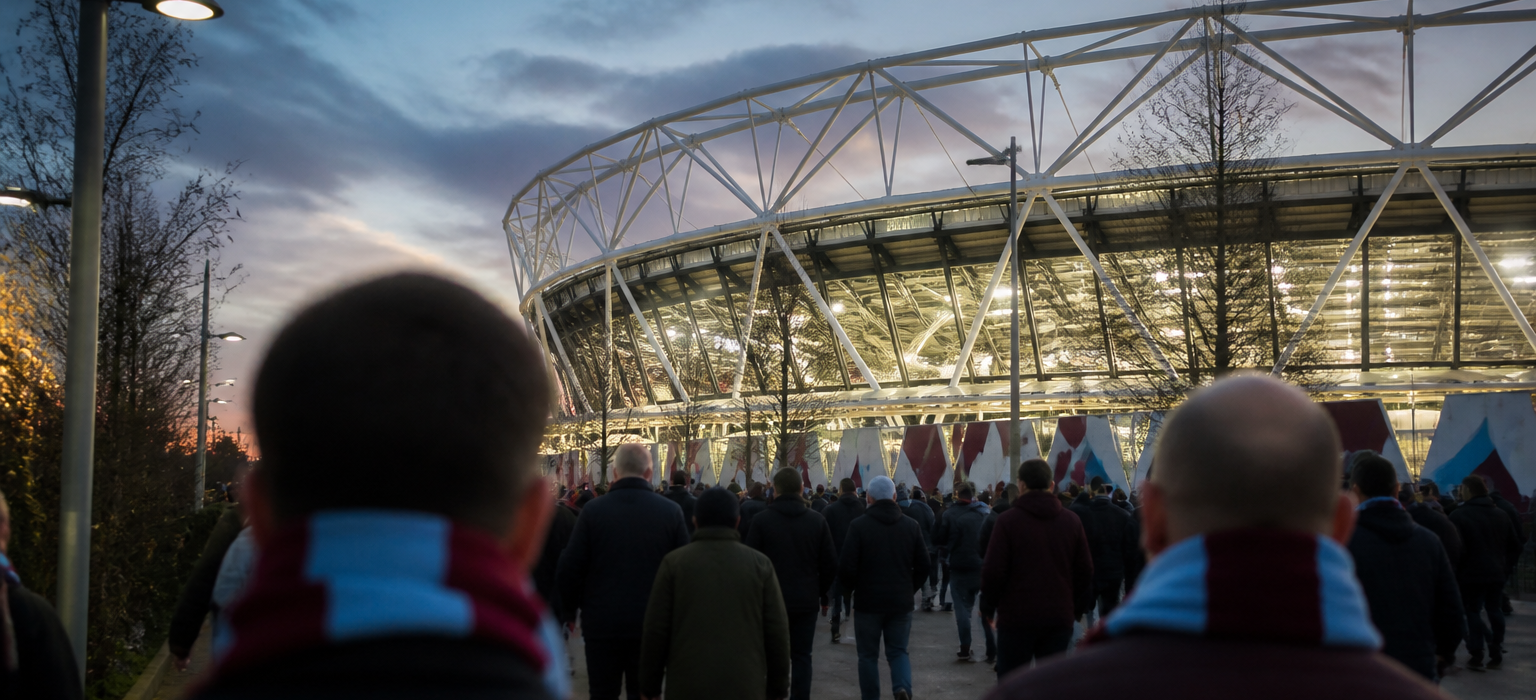
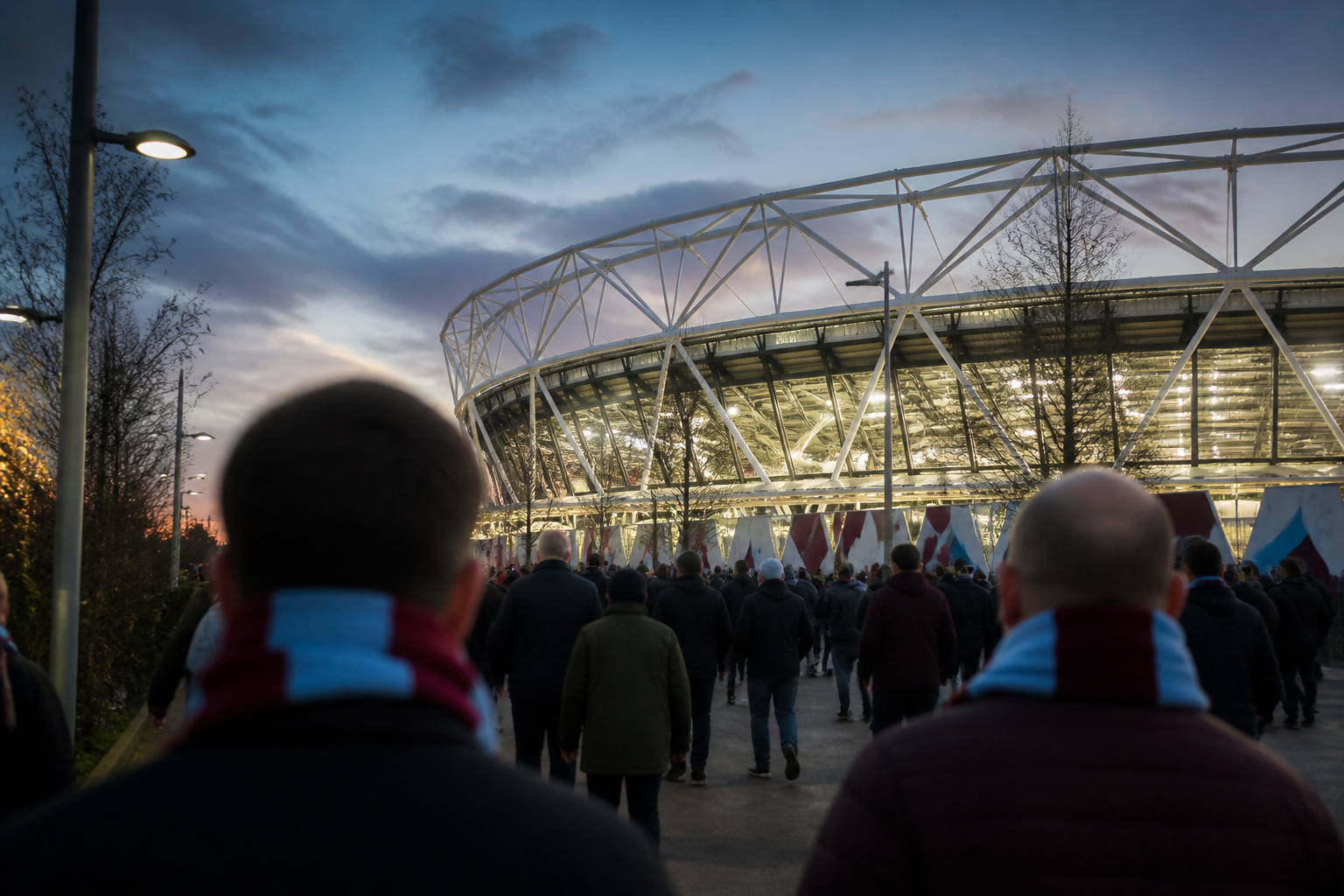
In 2016 West Ham left the Boleyn Ground for the London Stadium in Queen Elizabeth Olympic Park, Stratford — the converted main venue from London 2012. Capacity for football is far larger than Upton Park’s, which changed the economics and the atmosphere.
The move remains contested among supporters. Some see Stratford as a necessary step into a bigger London football future: better transport links, more seats, a global stage. Others miss the crush of Green Street and the sense that the ground belonged only to West Ham.
For trip planners, the practical reality is simple: home matches are now in Stratford, with Stratford station and Docklands Light Railway options that are usually easier for first-time visitors than the old Upton Park approach. The club’s identity — claret and blue, bubbles, Irons — travelled with them even if the postcode changed.
When you read modern match-day guides, treat London Stadium as the current home and the Boleyn as the emotional previous chapter. Both belong in the history; only one takes tickets today.
League life: promotion, relegation and East London rivalry
West Ham’s league story is cycles: top-flight seasons, relegations, promotions, and long stretches fighting to stay among England’s elite. That rhythm is part of the club’s character — less dynasty, more resilience.
East London rivalry, especially with Millwall, runs deep and older than Premier League branding. It is a local rivalry with industrial roots, not a TV-product derby invented for highlights packages. Visitors should treat derby weeks with the same caution they would for any intense English fixture: colours, pubs and travel plans need thought.
Looking ahead from late 2026, West Ham’s competition level can shift with promotion and relegation like any English club’s. Always confirm the current division and ticket channels before you book flights. History does not freeze the table.
What West Ham history means for a football trip
If you are building a London weekend around the Hammers:
- Read the crest. The hammers are a real origin story — shipyard labour, not a logo agency.
- Respect both homes. Upton Park is heritage; London Stadium is where you watch now.
- Expect cup romance in the folklore. FA Cup and European nights loom larger in West Ham storytelling than league title parades.
- Plan Stratford, not nostalgia. Hotels, Tube and DLR should aim at the Olympic Park area unless you are doing a heritage walk around Green Street on a non-match day.
- Buy tickets the official way. Use the club’s channels or a trusted trip partner such as Sports Travel Online — not random social-media “guarantees.”
For wider London planning across multiple clubs, start with our London football trips guide and the Premier League overview.
Quick timeline
- 1895 — Founded as Thames Ironworks F.C.
- 1900 — Reformed as West Ham United
- 1904 — Move to the Boleyn Ground (Upton Park)
- 1923 — First FA Cup final at Wembley (runners-up); promotion to the top flight
- 1964 / 1975 / 1980 — FA Cup winners
- 1965 — European Cup Winners’ Cup
- 2016 — Move to London Stadium
- 2023 — UEFA Europa Conference League winners
FAQ
When was West Ham United founded?
As Thames Ironworks in 1895, then West Ham United from 1900.
Why are they called the Hammers?
From the Thames Ironworks shipyard roots — the hammer motif on the badge.
Where did West Ham play before London Stadium?
The Boleyn Ground in Upton Park from 1904 to 2016.
How many FA Cups have West Ham won?
Three: 1964, 1975 and 1980.
Is West Ham a good club for a first London football trip?
Yes if you want East London identity and a large modern stadium. Ticket availability varies by opponent and competition — confirm current sales before you travel.
West Ham’s history is not a highlight reel of constant titles. It is a continuous East London story: ironworks, Upton Park, cup days, and a new chapter in Stratford. Understand that arc and a Hammers match day makes a lot more sense — whether you are a lifelong Iron or a visitor collecting London grounds.