Merseyside Derby Travel Guide for Neutral and Visiting Fans
The Merseyside derby is family feud and city theatre at once. Liverpool versus Everton still pulls the city into one shared weekend even when the two clubs sit in different parts of the table. For neutrals and visiting fans, the day can be unforgettable—if you respect ticket scarcity, colour etiquette, and the simple fact that this is not a novelty fixture for locals.
This guide focuses on travel practicalities: where the game might be, how hard seats are, how to move around the city, and how to enjoy the buzz without inventing trouble.
First: know which ground you are going to
Liverpool’s home derby is at Anfield. Everton’s home fixture depends on the club’s current stadium situation. Into 2026/27 and beyond, visitors should verify the home ground closer to travel—Everton’s move toward the new Bramley-Moore Dock stadium means you should not assume Goodison forever, and you should not invent seating maps from old blogs. Check official club channels for the exact venue, transport advice, and bag policy for your date.
The travel principle stays the same either way: derby day compresses the city. Hotels fill, pubs fill, and transport runs hotter than a mid-table Tuesday night. Screens around town will be packed even if you never get inside the stadium itself.
Tickets: scarcity with extra spice
Derby tickets are harder than ordinary league games. Season-ticket holders and members absorb most supply. Away allocations are limited and often balloted. Neutrals hoping for a casual purchase are usually disappointed.
Realistic routes:
- Club membership and ballots for the home side you are targeting
- Official hospitality when you need certainty
- Away tickets only via the visiting club
- Established football travel operators when a packaged seat is part of a wider trip—always read what is actually confirmed
Do not buy from strangers online. Derby demand creates perfect conditions for fakes and double-selling. If you miss out, you can still travel for the atmosphere, a screened pub in a sensible area, and the city’s football culture—just adjust expectations before you book non-refundable flights.
For broader England trip planning, see Football Trips England. Firms such as Gothia Sports Travel sometimes help structured groups; verify inclusions the same way you would with any package.
Where to stay on derby weekend
Central Liverpool works well for neutrals: you can reach either club’s orbit without sleeping in the loudest match-day pocket. Book earlier than for a normal weekend. Flexible rates help when kick-off times move after television scheduling.
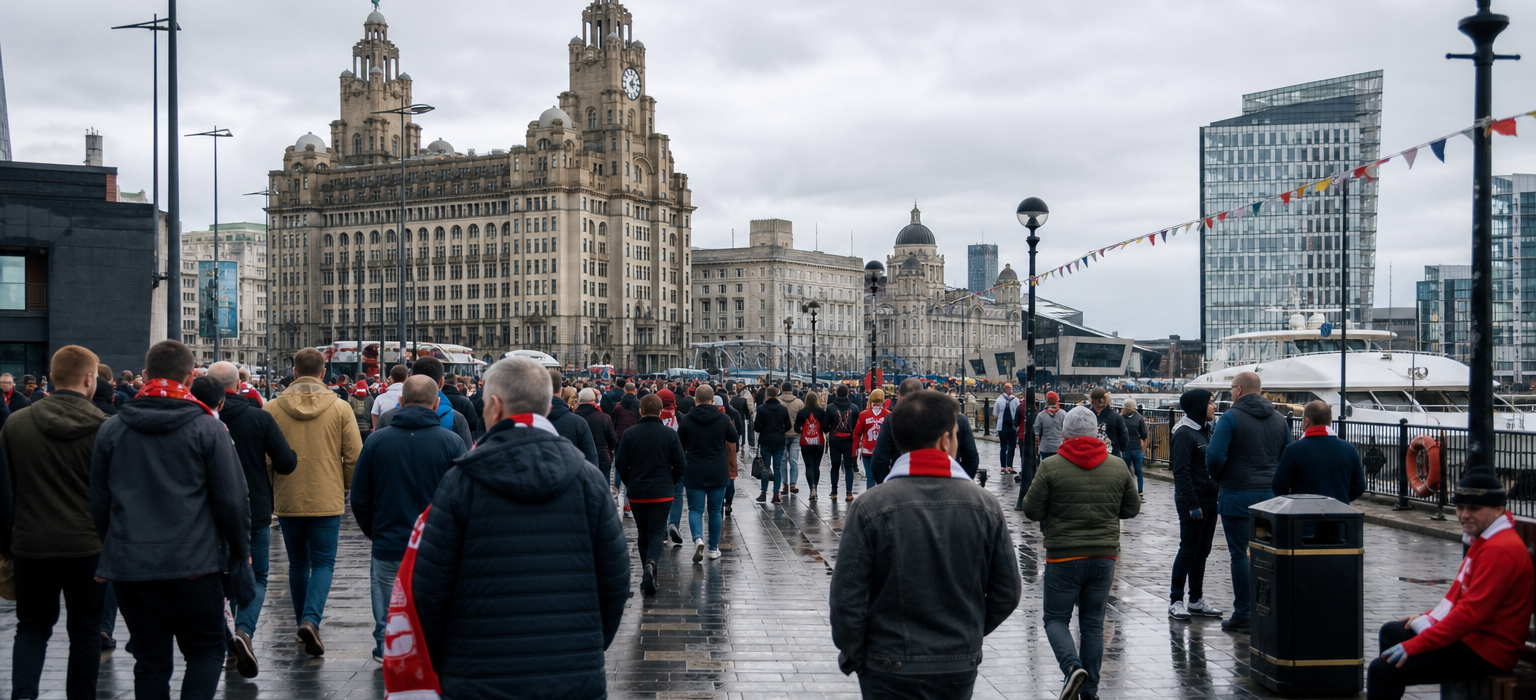
If you already hold tickets, staying nearer that stadium reduces pre-match stress. If you are ticketless, prioritise a base near Lime Street, the waterfront, or another well-connected area with good evening options. Quiet side streets are lovely at midnight; they are less helpful when you need a busy, well-lit walk back after a late kick-off.
Compare cancellation terms carefully. A derby rearranged by an hour can wreck a tight airport connection even when the hotel itself is fine. Build one spare night into the plan if your outbound flight sits uncomfortably close to a Sunday lunchtime kick-off.
Getting around without the meltdown
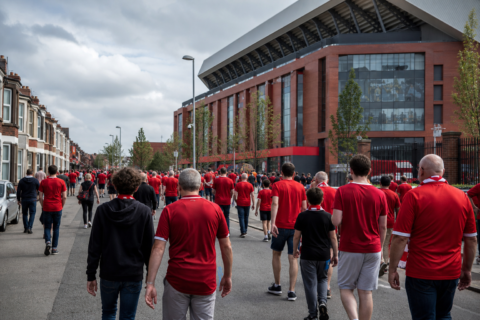
Derby crowds mean buses and local roads near the ground get packed. Plan to walk more than you think. Leave your hotel earlier than the map’s optimistic estimate.
Practical habits:
- Check local disruption notices the morning of the game
- Travel light and keep valuables zipped away in dense crowds
- Decide your post-match exit before the whistle—wait out the first crush or walk further before boarding
- Rideshares surge; do not rely on them as your only plan
Evening kick-offs raise the stakes on last trains and tired decisions. Know your return before the “one more pint” conversation starts. If you are new to the city, pin two routes back to the hotel—primary and backup—so a closed road does not become a crisis.
Pubs, colours, and not being that tourist
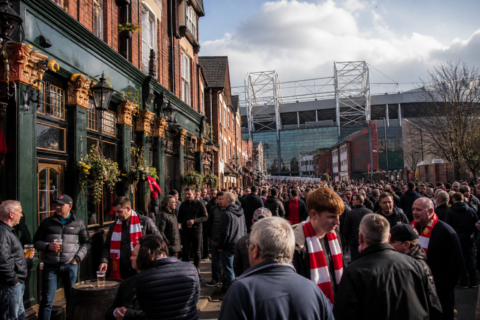
Merseyside derby pubs are not a costume parade for visitors. Pick a side for the day if you are in a partisan bar, or choose neutral-friendly city spots if you are truly unaligned. Do not wear one club’s shirt into the other club’s stronghold “for the photos.”
Good visiting behaviour:
- Follow local lead on songs you do not know
- Skip lectures about refereeing history
- Keep phones ready for atmosphere shots, not for filming arguments
- Leave space around families and older fans in crowded doorways
The city’s reputation for a relatively civil derby compared with some rivalries is not a free pass to be reckless. Respect is still the dress code. If someone is clearly looking for a reaction, deny them the content and move on with your day.
Match-day rhythm that works
Morning: Easy breakfast near your hotel. Confirm kick-off, gate numbers, and transport once more. Charge your phone overnight like it is match kit.
Early afternoon (for a daytime kick-off): Move toward the stadium area with time to spare. Eat before the worst queues. Soak the streets without blocking pavements for people who do this every other week.
Sixty minutes before kick-off: Head to your turnstile. Security is thorough when the fixture is big; patience beats arguing about belt buckles in the rain.
Full time: Expect emotion either way. Give the crowd room. If you are visiting, your job is to leave cleanly, not to perform for anyone’s camera. Save the debate for the hotel lobby later.
Safety without paranoia
Most visitors have a brilliant, uneventful day. Still:
- Stick to busy routes after dark
- Keep an eye on drinks in very crowded bars
- Follow stewards and police instructions without debate
- Separate from any group looking for confrontation—curiosity is not bravery
If you are travelling with children or mixed generations, build longer buffers and choose seats or areas with easier exits when the club’s map allows. Agree a meeting point outside in case someone is delayed at the gate or loses a phone signal in the crush.
Making a full Merseyside weekend
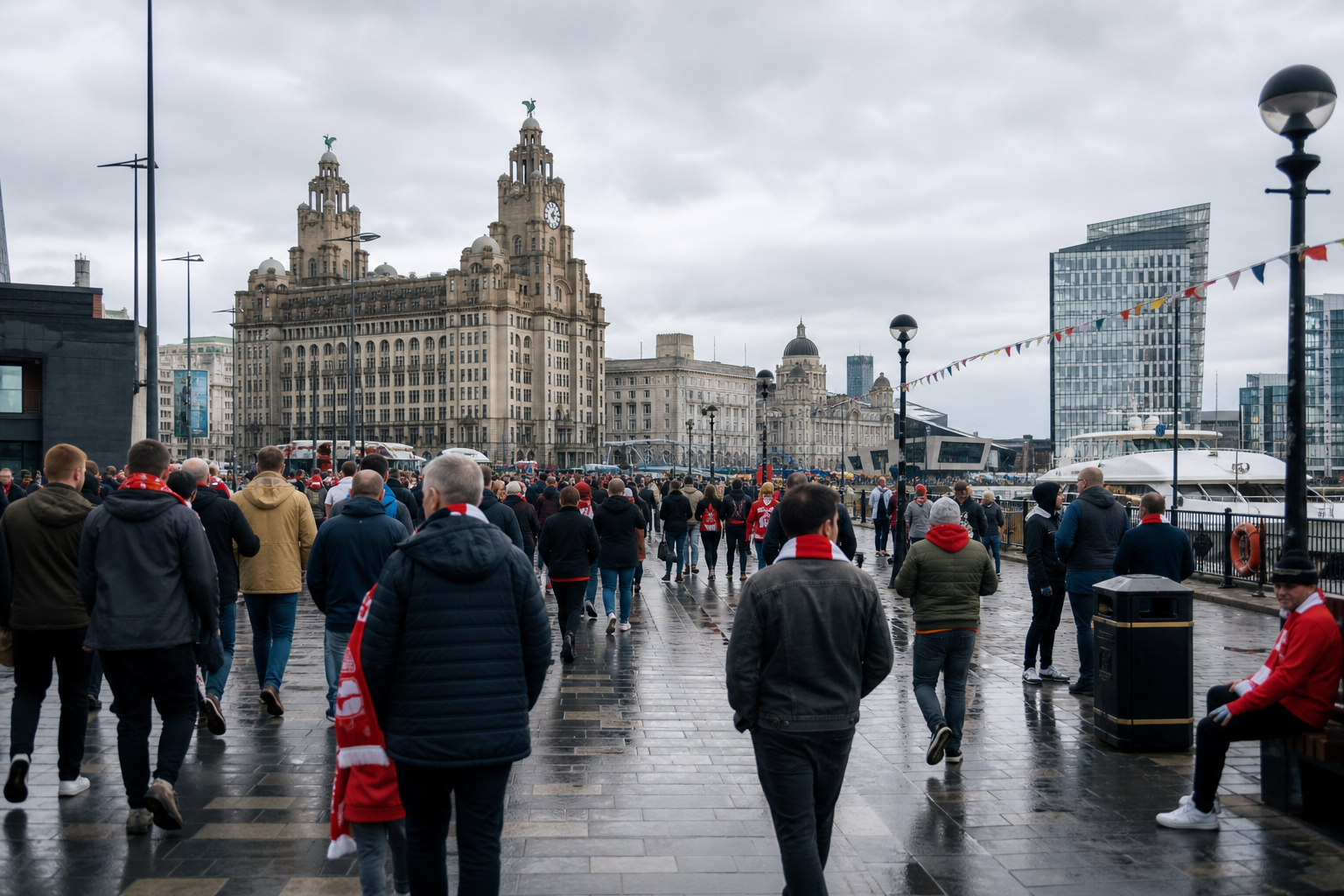
Even with one derby ticket, shape a proper trip. Waterfront walks, museums, music history, and ordinary great pubs fill the gaps. If Everton and Liverpool calendars ever offer a two-match window in one visit, treat that as a scheduling miracle and verify both ticket channels early—do not assume one membership unlocks both clubs.
A stadium tour on a non-derby day can add context if your match ticket never materialises. The city still tells the football story even when the turnstile does not. Use spare time for the things only Liverpool does well: waterfront light, music heritage, and conversations that start with football and end somewhere unexpected.
Quick derby checklist
- Confirm the exact stadium and transport advice for your date
- Treat tickets as scarce; use official routes only
- Book hotels early with flexibility if possible
- Choose pub strategy and colours with respect
- Leave early, travel light, plan the exit
- Enjoy the noise—then get home safely
Final word
The Merseyside derby rewards visitors who plan like adults and behave like guests. Tickets are hard, emotions are high, and the city is watching its own story play out. Get the logistics right, keep your ego quiet, and you will understand why this fixture still matters far beyond ninety minutes on the clock.