Liverpool Football Trips: Visiting Anfield
A Liverpool football trip is high on many travelling fans’ lists for good reason. Anfield remains one of English football’s most charged stadiums: tight streets, a famous Kop, and a match-day ritual that starts long before kick-off. Demand for match tickets is intense, so this guide focuses on practical planning—how to approach tickets, how to reach the ground, where to stay, and how to enjoy the day without treating Anfield like a museum exhibit.
For season-wide context, begin with football trips to England and our Premier League hub, then lock dates around confirmed fixtures rather than rumoured kick-offs.
Why Anfield Is a Destination Stadium Visit
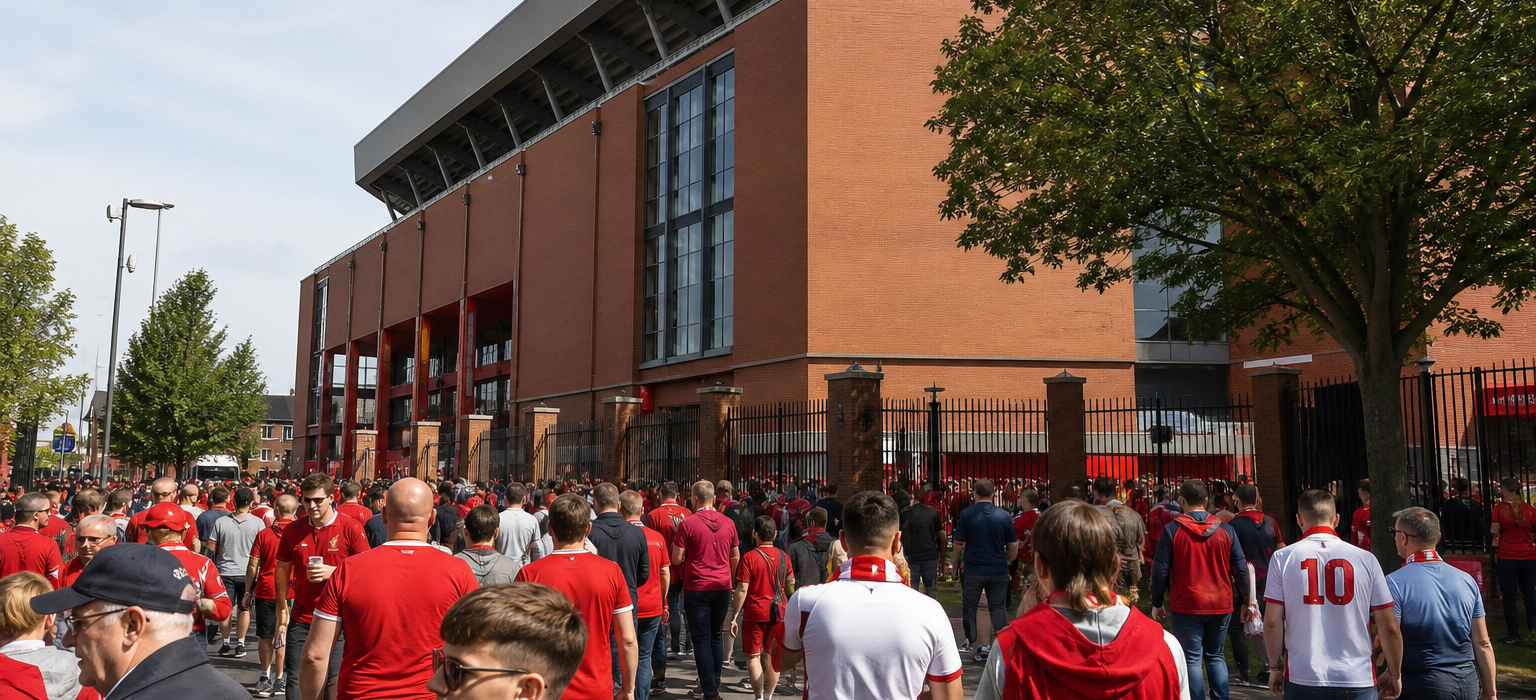
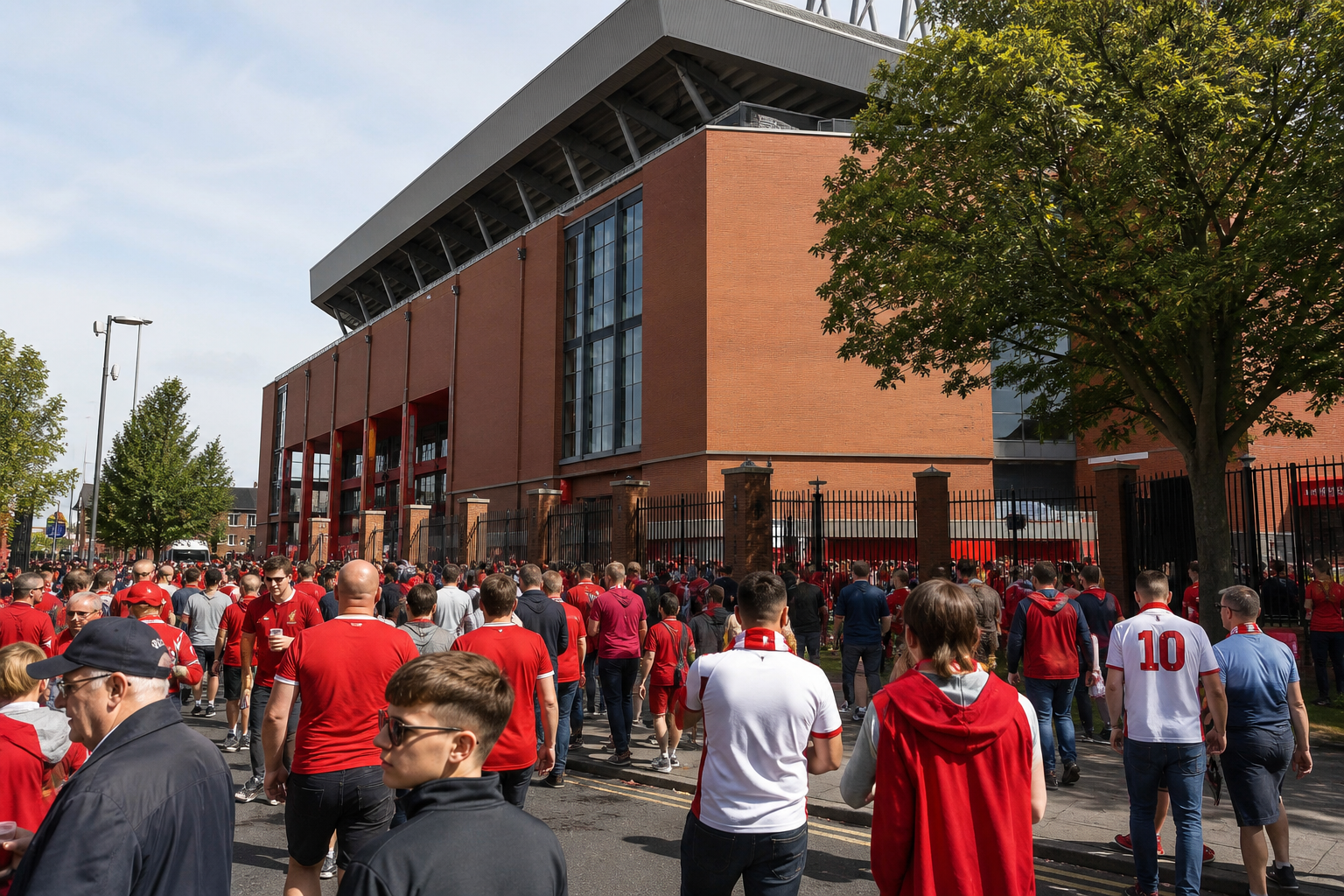
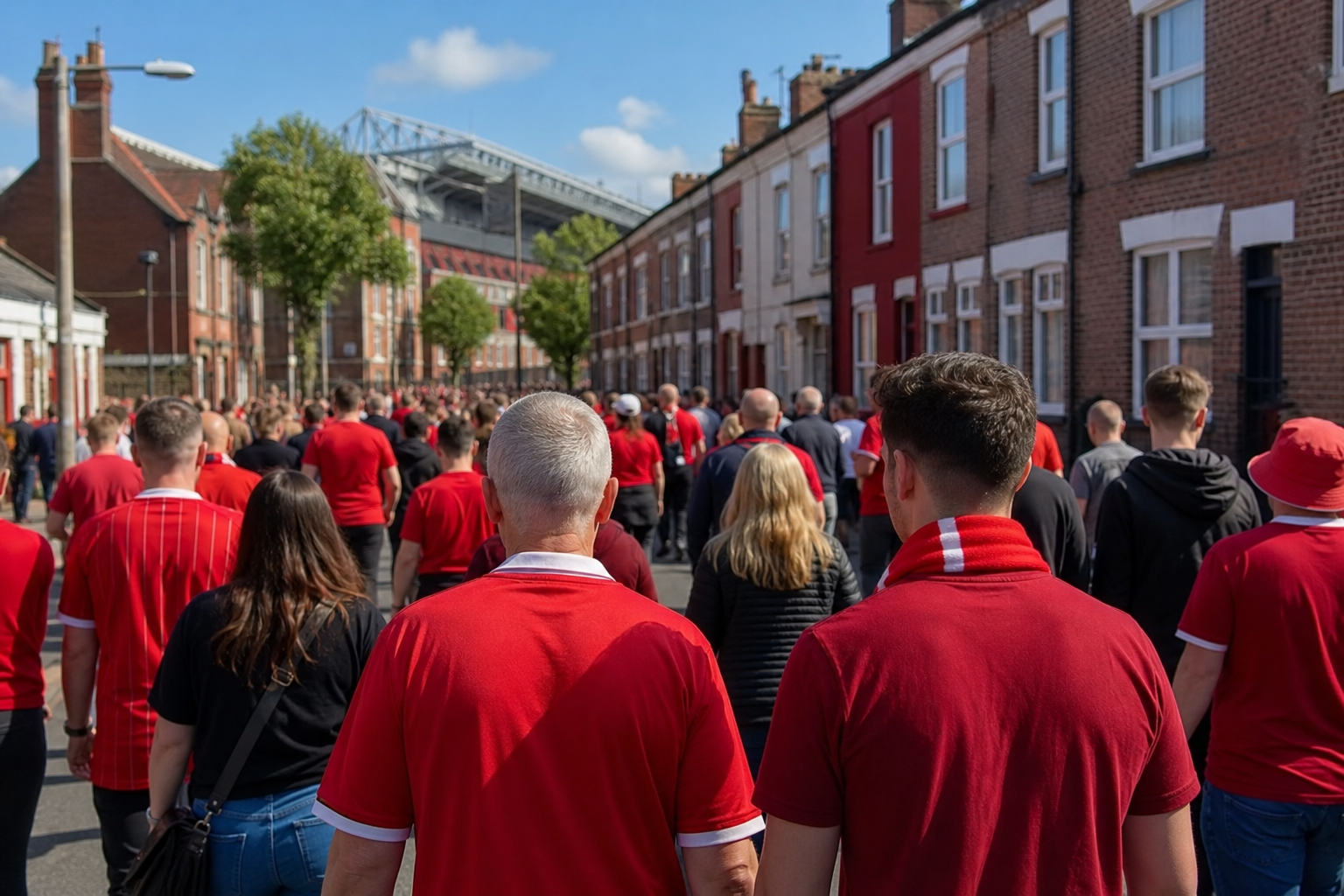
Anfield sits in a residential pocket of north Liverpool rather than a retail park. That setting shapes the experience. You walk past terraced houses, street vendors, and pubs that have served supporters for generations. The stadium has been expanded and modernised, yet the approach still feels local. For first-time visitors, the contrast between a global club and a neighbourhood ground is part of the magic.
Atmosphere peaks for European nights and major Premier League fixtures, but even a standard Saturday carries weight. If your goal is a stadium visit with genuine noise rather than a sterile bowl, Anfield delivers—provided you accept that tickets are scarce and planning must start early.
Allow time before kick-off to walk the perimeter, find the Hillsborough memorial if you wish to pay respects, and absorb the build-up. Rushing from a late train straight to a turnstile is the fastest way to miss what makes the trip special.
Match Tickets for Liverpool at Anfield
Liverpool match tickets are among the hardest in the Premier League to obtain through general sale. Official routes typically include membership, ballots, hospitality, and official partners. Availability depends on opponent, competition, and how many seats remain after home allocations. There is no reliable last-minute walk-up culture for big games.
Avoid touts and unofficial resale platforms that cannot guarantee scanning at the gate. Tickets are often nominal and may be checked against ID. If hospitality is your route, compare what is included—seat location, lounge access, and arrival times—rather than chasing a headline figure. Prices move with demand, so treat any number you see online as a snapshot, not a promise.
Specialist trip planners can help when you need tickets aligned with hotels and transfers. Review options via Sports Travel Online and Gothia Sports Travel. Soft CTA: decide your must-have fixture list first, then let a trusted operator or official channel do the allocation work while you book refundable rooms.
Always reconfirm kick-off once television selections land. A 3pm Saturday can shift to Sunday or a midweek evening, which matters if you have airport connections.
Getting to Anfield
From the city centre
Many fans stay in Liverpool city centre or the Albert Dock area and travel to Anfield by bus, taxi, or a dedicated match-day shuttle where available. The walk from some central hotels is possible but long; most visitors prefer a bus along the familiar routes toward Walton Breck Road or a short cab ride timed for traffic.
Trains and airports
Lime Street is the main rail gateway. From Manchester, London, or Birmingham, build a buffer—match-day trains fill, and a tight connection after a late final whistle is stressful. Liverpool John Lennon Airport works for many European flights; Manchester Airport is an alternative with a longer transfer. If you land the same morning as a lunchtime kick-off, you are cutting it fine.
Driving
Driving to Anfield on a match day means congestion, limited nearby parking, and residential restrictions. Official and private car parks fill early. Unless you have a pre-booked space, public transport or a taxi from the centre is simpler.
Hotels for a Liverpool Football Trip
City-centre and waterfront hotels put restaurants, the Beatles tourism circuit, and evening walks on your doorstep, with a 15–25 minute ride to the ground depending on traffic. Staying closer to Anfield or Everton’s side of the city shortens the match-day transfer but offers fewer late dining options.
Book early for weekends when Liverpool host elite opponents. Choose refundable rates until the kick-off is confirmed. Families often prefer a central base so non-match hours are easy to fill; groups of friends sometimes split—some near the pubs on the approach, others downtown for nightlife after the result.
Two nights is the comfortable minimum: arrive the afternoon before, walk the waterfront, then give Anfield a full, unhurried day.
Pubs, Food, and Pre-Match Streets
The streets around Anfield are the pre-match show. Pubs on the approaches fill hours before kick-off. Expect standing room only closer to time, merch stalls, and a constant flow of red shirts. If you want a sit-down meal, eat in the city centre earlier, then travel in for the last ninety minutes of atmosphere.
Away fans should follow designated pub and walking advice from police and the club. Neutrals wearing home colours will blend in more easily than those advertising the opposition. Inside the stadium, concourse food is typical Premier League fare; queues swell at half-time.
Cashless payments are standard. Travel light: bag policies are enforced and large backpacks cause delays at the search line.
Match Day at Anfield
- Confirm your entrance and whether your ticket is mobile.
- Leave the hotel with a buffer for traffic on the last mile.
- Walk the outside of the ground if time allows.
- Be in your seat for the anthem and team walkouts—this is the moment many travellers remember.
- Agree a post-match meeting point; phone signal and crowd density can split groups.
Stewards manage flows tightly after full time. If you have a train, do not assume you can linger for photos and still make a tight departure. Either stay late and travel the next morning, or leave a wide margin.
If you have a spare morning, the official stadium tour is a separate product from match tickets and can sell out on peak weekends. Book it for a non-match day when possible so you are not rushing from a tour group to a turnstile with minutes to spare.
Combining Anfield with a Wider England Trip
Liverpool pairs naturally with a Manchester weekend or a longer north-west loop. Use football trips to England for multi-city planning and the Premier League guide to avoid back-to-back kick-offs that look good on paper but fail on trains.
When you want the admin handled, Sports Travel Online and Gothia Sports Travel can package seating and hotels so the football trip stays about the occasion.
Practical Checklist
- Official or specialist-issued ticket and ID if required
- Buffer time on trains and airport transfers
- Layers—Anfield can be cold and wet even in spring
- Hotel within a reliable taxi or bus range
- Offline pin for your turnstile
- Respect for memorials and local residents on the approach streets
Final Thoughts
Anfield rewards travellers who plan early and arrive unhurried. Treat match tickets as the scarce item they are, build hotels around confirmed times, and give the streets as much attention as the ninety minutes. Do that, and a Liverpool stadium visit becomes more than a box ticked—it becomes the centrepiece of your English football travel.