Arriving as a Visiting Fan at Old Trafford
Old Trafford is more than a stadium address—it is a pilgrimage site for millions of Manchester United supporters and curious neutrals alike. For visiting fans, match day mixes history, noise, and practical challenges: getting a ticket, choosing the right approach route, and knowing how to behave in a passionate home crowd. This Football Guide walkthrough covers what you need for a smooth Old Trafford experience, from Metrolink to the final whistle.
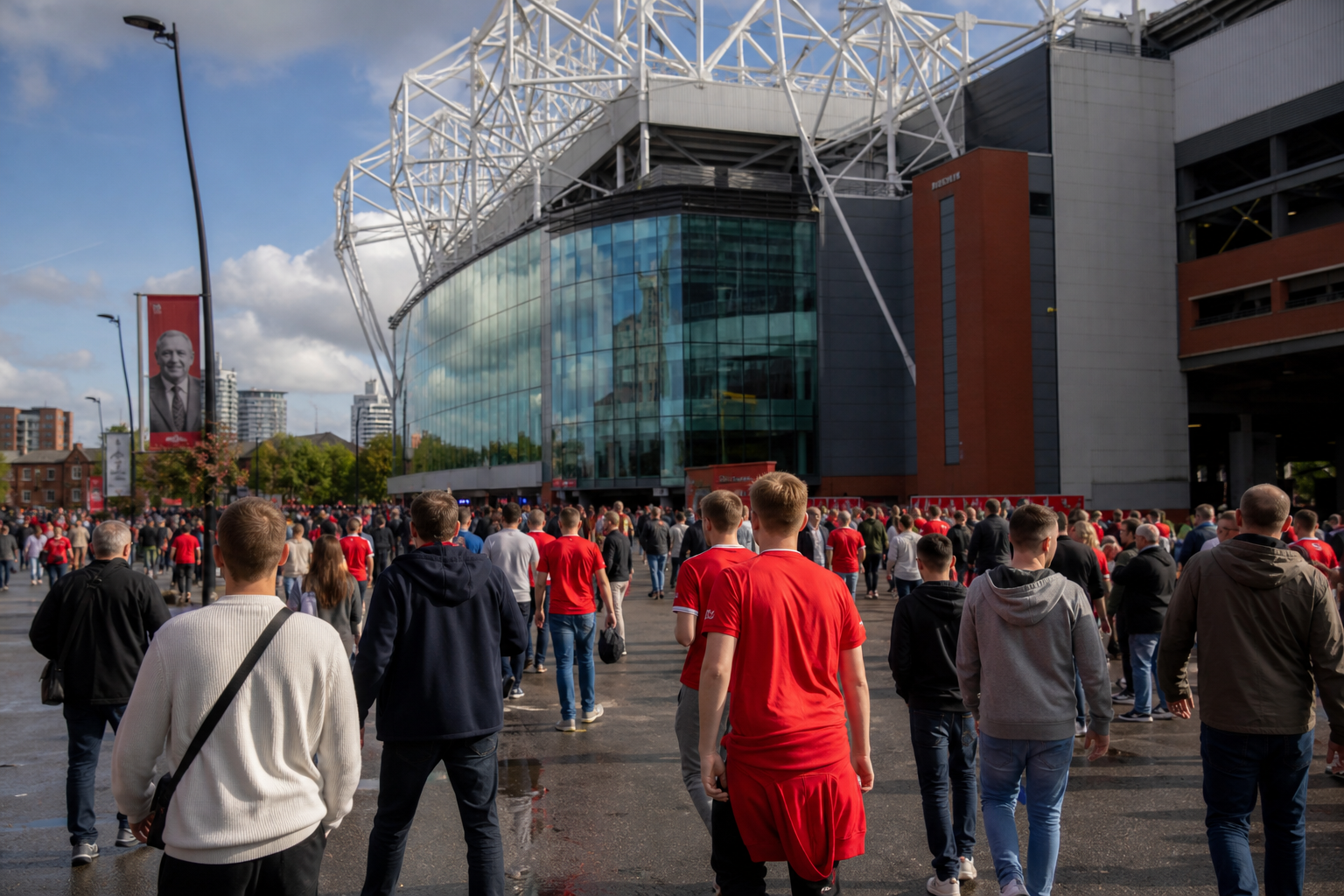
Whether you are a lifelong United follower flying in for one game or a tourist adding football to a city break, treat the day like a timed operation with room for atmosphere. The Theatre of Dreams nickname exists for a reason; your job is to arrive calm enough to enjoy it.
Before You Go: Tickets, Memberships, and Expectations
Ticket reality for visitors
Premier League seats at Old Trafford for high-profile opponents are hard to find. Club membership and ticket schemes are the primary path; hospitality packages exist at a premium for those who prioritise guaranteed access and a sit-down meal. Away allocations for visiting club supporters are controlled through the away team—do not buy random “away end” tickets from strangers.
Exact prices fluctuate by opponent and category. Expect official face values in a broad band that rises for bigger fixtures, and be wary of unofficial sellers asking for large sums with no verification. If you cannot secure a ticket through trusted channels, switch plans to a stadium tour and a city-centre match-day atmosphere instead of risking a scam.
Join waiting lists early in the season if your travel dates are flexible. Sometimes a midweek cup tie or a less glamorous league opponent opens a door that a Saturday top-four clash will not.
Checking kick-off and travel windows
English kick-offs move for television. Reconfirm time and date close to departure. Build buffers around Piccadilly arrivals and Metrolink rides; a delayed train plus a packed tram can erase your pre-match pint. If you are connecting from Manchester Airport, add another cushion—security lines and luggage belts do not care about your kick-off.
Getting to Old Trafford on Match Day
Metrolink and walking routes
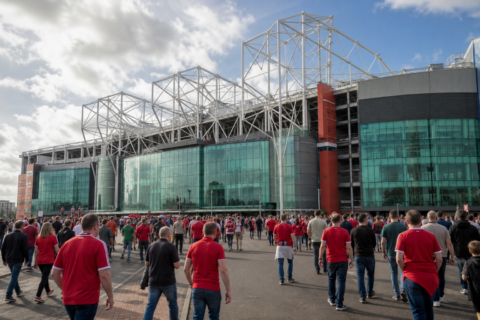
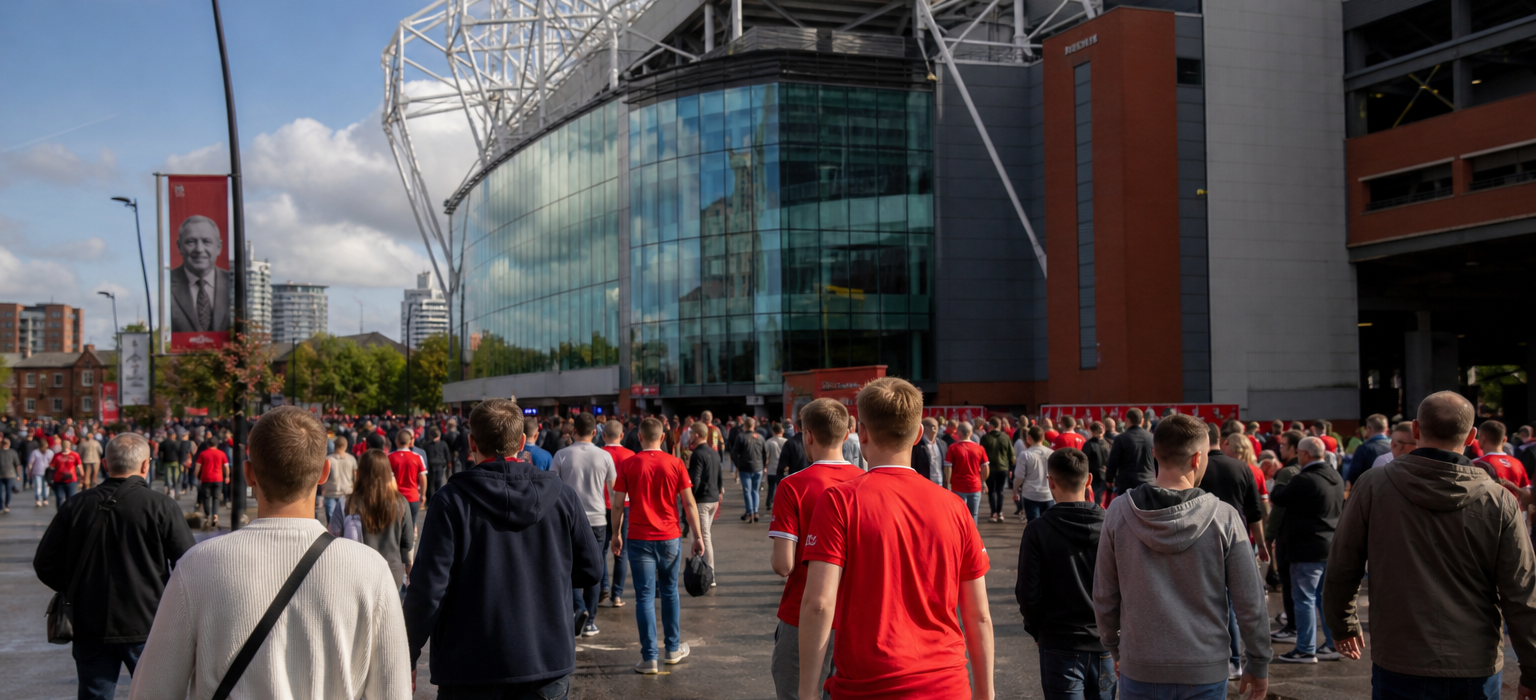
From Manchester Piccadilly or city-centre hotels, Metrolink is the default choice for most visitors. Trams towards the Old Trafford / Trafford area fill steadily from two hours before kick-off. Stand back from the doors, keep bags close, and allow time to walk from the stop through the crowds of red shirts.
Some fans prefer walking longer stretches from Salford Quays or city approaches when weather cooperates—it can feel calmer than waiting for an overpacked service. After full-time, patience beats rushing: stagger your exit, or linger for photos of the stands emptying under the lights. Families with children may prefer to leave a few minutes before the final whistle if the result is settled, simply to avoid the densest crush.
Driving and parking
Driving is possible but rarely ideal for first-timers. Roads clog, official parking needs advance planning, and post-match exits are slow. If you must drive, arrive very early and research club guidance on match-day parking zones. Most visiting fans are happier leaving the car at the hotel and treating the tram as part of the ritual.
Around the Ground: Atmosphere, Pubs, and Food
Pre-match pubs and the Sir Matt Busby Way feel
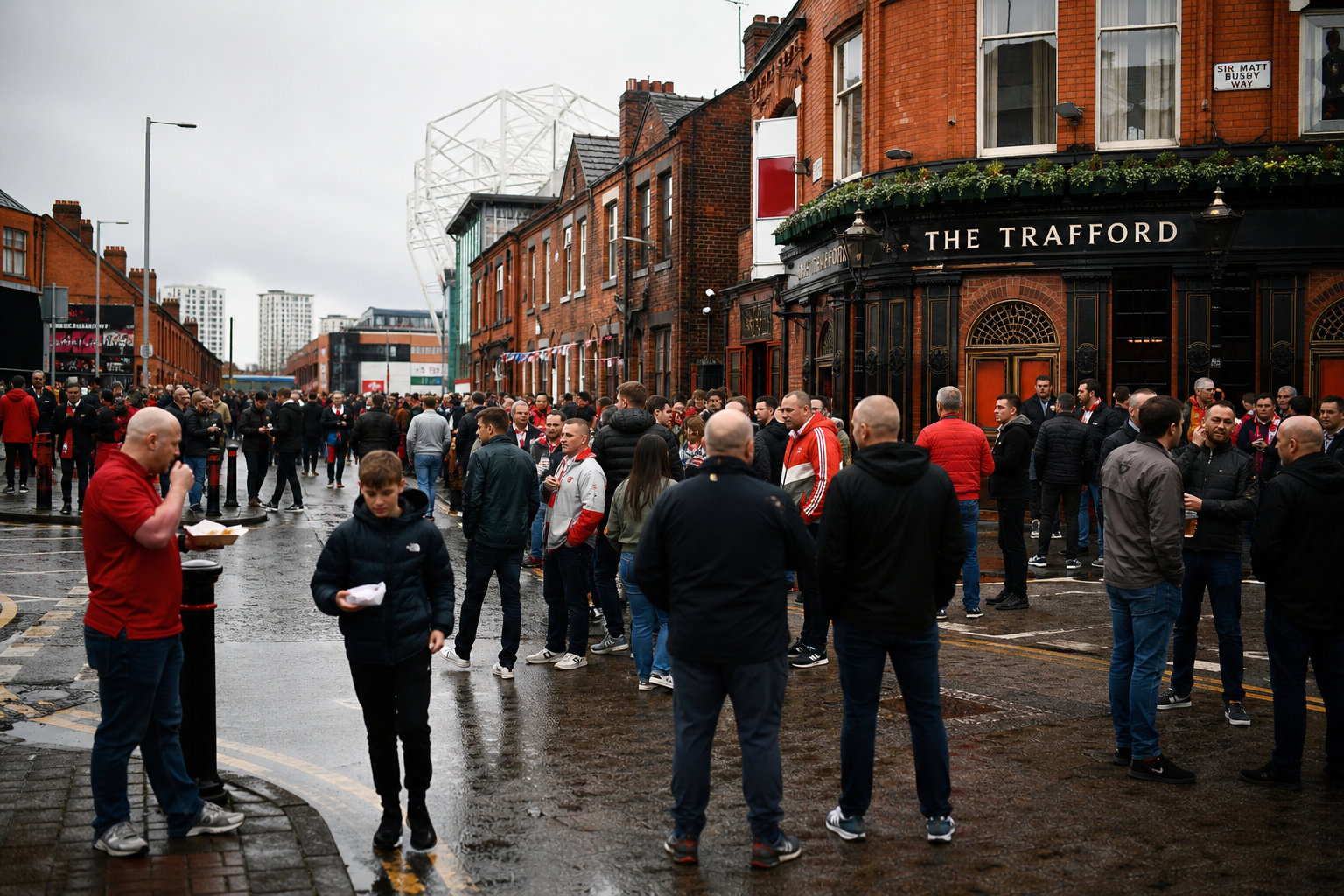
The streets approaching Old Trafford thicken with scarves, programme sellers, and chanting groups. Pubs near the ground fill early; many are strongly United. Visiting supporters of the opposition should follow their club’s advice on designated pubs and away routes. Neutrals wearing another club’s colours should stay aware of context—friendly banter is common; provocation is not.
Grab a classic pie or chips near the stadium, or eat a proper meal in the city centre beforehand if you want more variety. Stadium concessions are convenient but queues grow near kick-off. Carry a small amount of cash as backup, though contactless is widely accepted. If you collect programmes, buy early; popular issues disappear when the teams walk out.
Merchandise and the museum angle
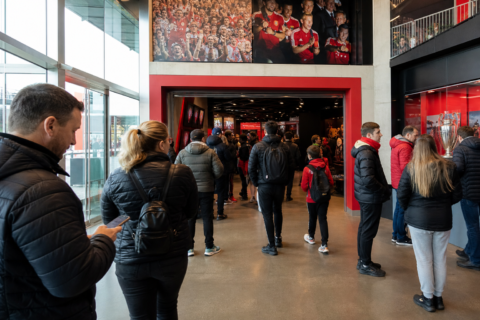
The megastore and museum area draw fans hours before the match. If history matters to you, consider a museum visit on a non-match day or arrive very early; match-day retail queues can eat your buffer. A scarf from an official shop is a safer souvenir than unverified street stalls selling dubious “limited” items. Look up tour availability for the day after your match if you want the tunnel and museum without racing a kick-off clock.
Inside Old Trafford: What Visiting Fans Should Know
Finding your seat and reading the crowd
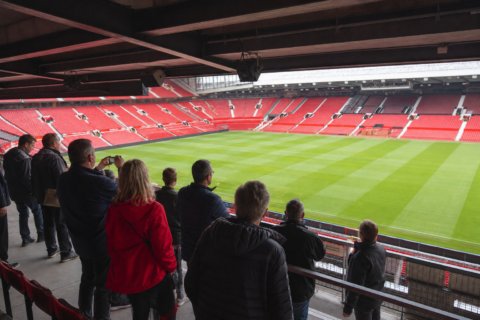
Allow time to clear security, find your block, and soak in the bowl. Old Trafford’s scale hits first-timers hard—tiers of red, the pitch framed by decades of big European nights. Learn your gate number from the ticket and follow stewards if unsure; they deal with confused visitors every week.
Sing when it feels natural, stand when those around you stand (within stadium rules), and never throw objects. Photography of the pitch and stands is fine for personal use; professional equipment may be restricted. If you are in a mixed area, keep celebrations respectful—especially late winners or contentious refereeing moments. Teach kids the basics of steward instructions before you go in; it reduces stress for everyone.
Half-time and full-time logistics
Toilet and food queues peak at half-time. Go early in the half if you need to move. At full-time, decide whether to wait for crowds to thin or join the flow towards Metrolink. Meeting points outside specific stands help groups reconnect when networks lag. Agree that plan before kick-off, not during the final song.
Hotels Near Old Trafford and City Links
Staying near Old Trafford or Salford Quays shortens your match-day commute and lets you hear the buzz build. City-centre hotels near Piccadilly trade a longer tram ride for better evening restaurant choices and easier onward travel. For a single United fixture, stadium-adjacent lodging is often worth the premium on big weekends—book as soon as your ticket is confirmed.
Check whether your hotel expects late returns after night matches; some bars and lobbies become unofficial fan hubs. Ask about bag storage if you have an evening flight the next day. A quiet room on a high floor can be worth more than a flashy lobby when your legs are done.
Derby Context and Big-Game Intensity
When Manchester City visit Old Trafford, the city sharpens. Security presence increases, tickets become almost mythical for casual buyers, and the noise level jumps. Visiting neutrals should treat derby day as a special category: earlier arrival, clearer meeting plans, and zero interest in street arguments. For many travellers, a “standard” Premier League home game still delivers the Old Trafford roar without derby-level scarcity.
European nights bring another flavour—flags, anthems, and a slightly different crowd mix. Kick-off times may be later; plan dinner accordingly. Cup ties can feel more chaotic in the best way, with travelling support and unfamiliar songs mixing into the usual soundtrack.
Practical Match-Day Checklist
- Ticket and ID accessible offline
- Weather-ready jacket (stands can feel cold even in autumn)
- Metrolink payment ready before you reach the platform
- Hotel address written down for tired post-match brains
- Time target: on site 90 minutes before kick-off for big games
- Soft budget for programme, pie, and a post-match drink
- Portable charger and a clear group meeting point
- Awareness of stadium bag policies before you leave the hotel
Soft CTA: Make Old Trafford Part of Your Manchester Story
An Old Trafford match day rewards fans who respect both the history and the logistics. Use this visiting-fan guide to lock transport, tickets, and pubs into a calm plan, then explore more Manchester football travel ideas on Football Guide (footballguide.link)—including Etihad match days, derby weekends, and stadium-tour combinations. Get the tram sorted, arrive early, and let the Theatre of Dreams do the rest.