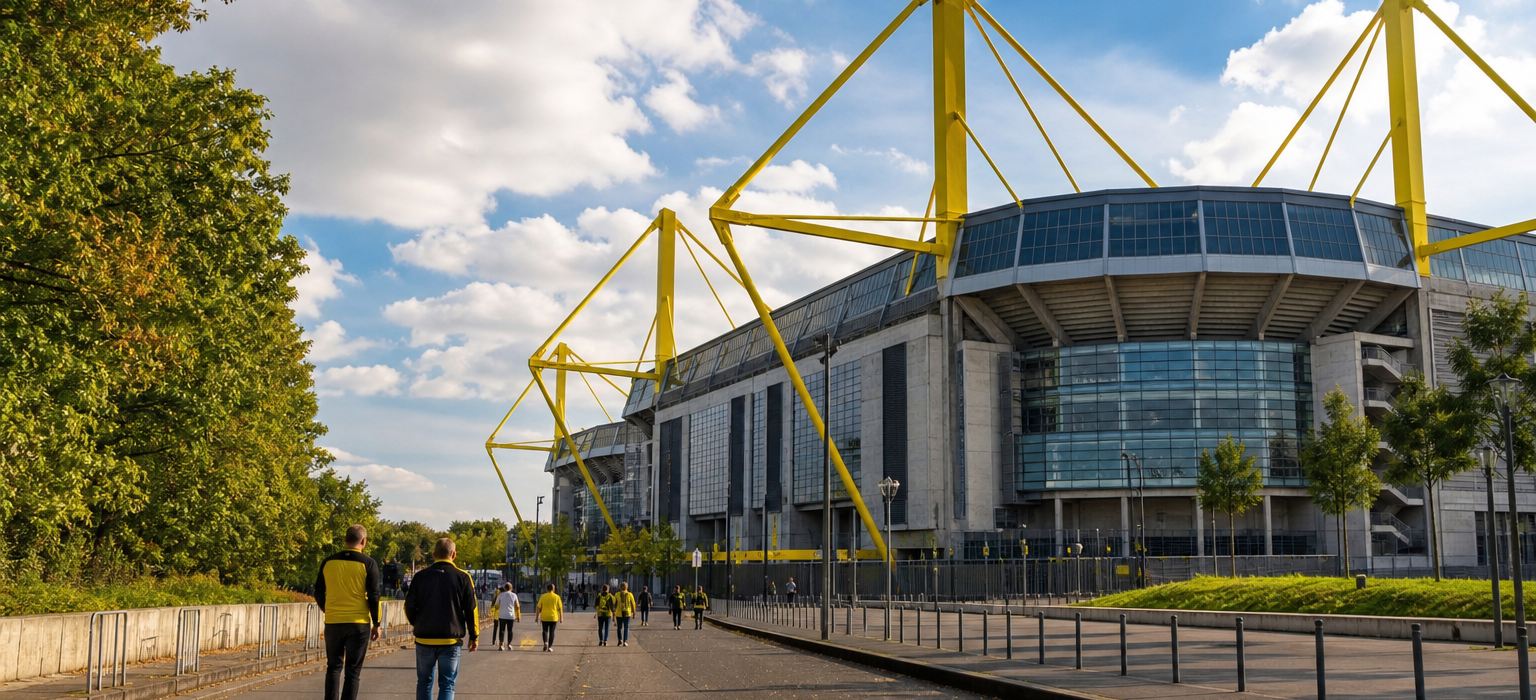
A Borussia Dortmund football trip remains one of Europe’s loudest weekend requests: black-and-yellow colours, a packed Signal Iduna Park, and the famous Yellow Wall—the Südtribüne standing terrace that defines so many visitor photos. This guide covers tickets, travel, hotels, food, and match-day timing for 2026/27, with one tourist warning that matters more than any selfie tip: do not buy or wander into the wrong Yellow Wall blocks if you are not prepared for a dedicated home standing culture.
If you are comparing clubs, start with our overview of football trips to Germany and the wider Bundesliga travel guide for calendars and how Dortmund sits beside the Rhine clubs and Schalke territory on the Ruhr map.
Why Dortmund Anchors Ruhr Football Travel
Signal Iduna Park match days combine global demand with a city that still feels industrial, proud, and walkable around the old centre. Pair football with a Westfalenpark stroll, a brewery dinner, or a Ruhr museum stop, and you have a full break—not just ninety minutes of noise.
Demand is highest for Der Klassiker against Bayern, the Revierderby against Schalke when both are in the top flight, European nights, and weekend fixtures against other title contenders. Midweek games can be slightly easier on hotels but still sell. Soft packages via Sports Travel Online and Gothia Sports Travel help when membership windows take the best categories.
Signal Iduna Park & the Yellow Wall: Tourist Seating Rules
The Yellow Wall is a standing home terrace with its own rituals, songs, and expectations. Tourists should avoid wrong Yellow Wall blocks—seats or standing places sold into dedicated home sections are not a casual photo opportunity. If you are visiting for atmosphere without joining ultras culture, choose seated categories clearly marked for general spectators, follow your ticket sector exactly, and never try to “sneak into” the Wall for a better video angle. Stewards and regulars notice; you will enjoy the night more from the right place.
Away fans must use allocated sections only. Verify gates, bag rules, and standing-versus-seated category names on official BVB channels for your date—older blog maps and social posts often mislabel blocks.
Tickets: Members, General Sale & Safer Habits
Dortmund’s membership and season-ticket ecosystem is huge. Priority windows mean popular fixtures can be heavily subscribed before casual buyers see stock. General sale inventory appears in waves and varies wildly by opponent. Klassiker and derby nights are among the hardest tickets in Germany. There is no responsible way to publish a single fixed ticket price that stays true across a season.
Safer purchase habits:
- Start with official BVB ticketing and read category descriptions carefully—especially anything referencing the Südtribüne or Yellow Wall.
- Use established football-travel specialists when you need a package.
- Be sceptical of social-media “guaranteed Wall tickets” with no company footprint.
- Align non-refundable flights only after you hold tickets—or keep fares flexible.
Soft package routes include Sports Travel Online and Gothia Sports Travel. Cross-check every date against official Dortmund and Bundesliga calendars.
Getting to Dortmund & Signal Iduna Park
Airport: Dortmund Airport (DTM) suits some European routes; Düsseldorf (DUS) and Cologne Bonn (CGN) are common alternatives with rail links into the Ruhr.
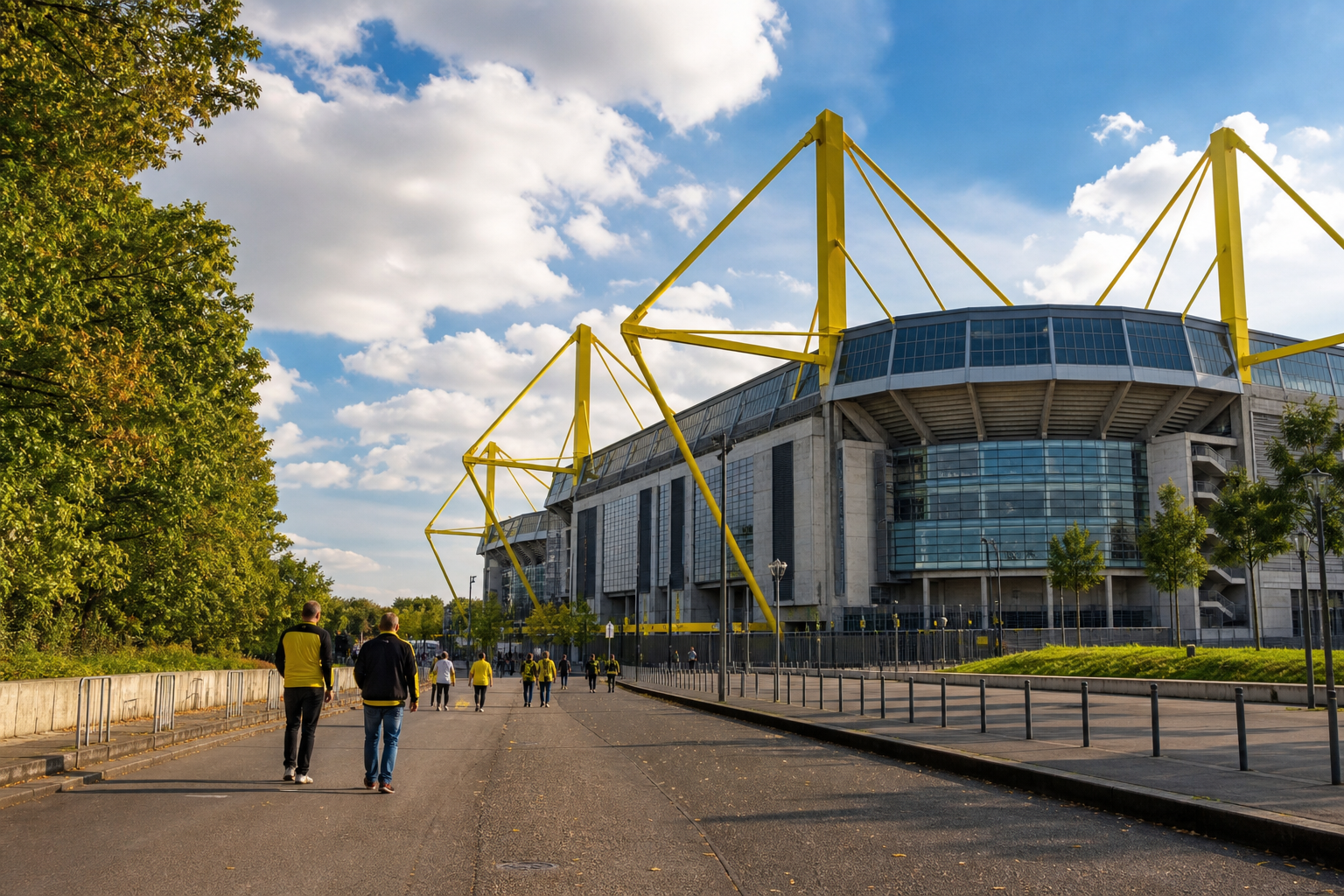
Stadium access: Signal Iduna Park sits south-west of the centre. U-Bahn, buses, and match-day walking routes from nearby stops are the default—build a buffer for big games. Security queues and crowded platforms are normal when the Wall is full.
Rail: Dortmund Hauptbahnhof connects with ICE and regional services across North Rhine-Westphalia, useful for multi-stop football trips to Germany that also take in Cologne, Leverkusen, or Gelsenkirchen.
Hotels: Where to Base Yourself
Most visitors stay central—near the Hauptbahnhof, the old town, or well-connected U-Bahn lines—and travel out on match day. That maximises food and evening options. Staying nearer the stadium shortens the final approach but can feel quieter after full time.
Priorities for football travellers:
- Simple transit toward Signal Iduna Park
- Flexible cancellation if kick-off moves
- Clear baggage storage after a Sunday game
- Quiet rooms if you are not joining the loudest pre-match bars
Dortmund hotel rates spike around Klassiker weekends, European nights, and regional events. Book early. Use the Bundesliga travel guide if you are sequencing BVB with another Ruhr or Rhine club.
Food, Cafés & Pre-Match Spots
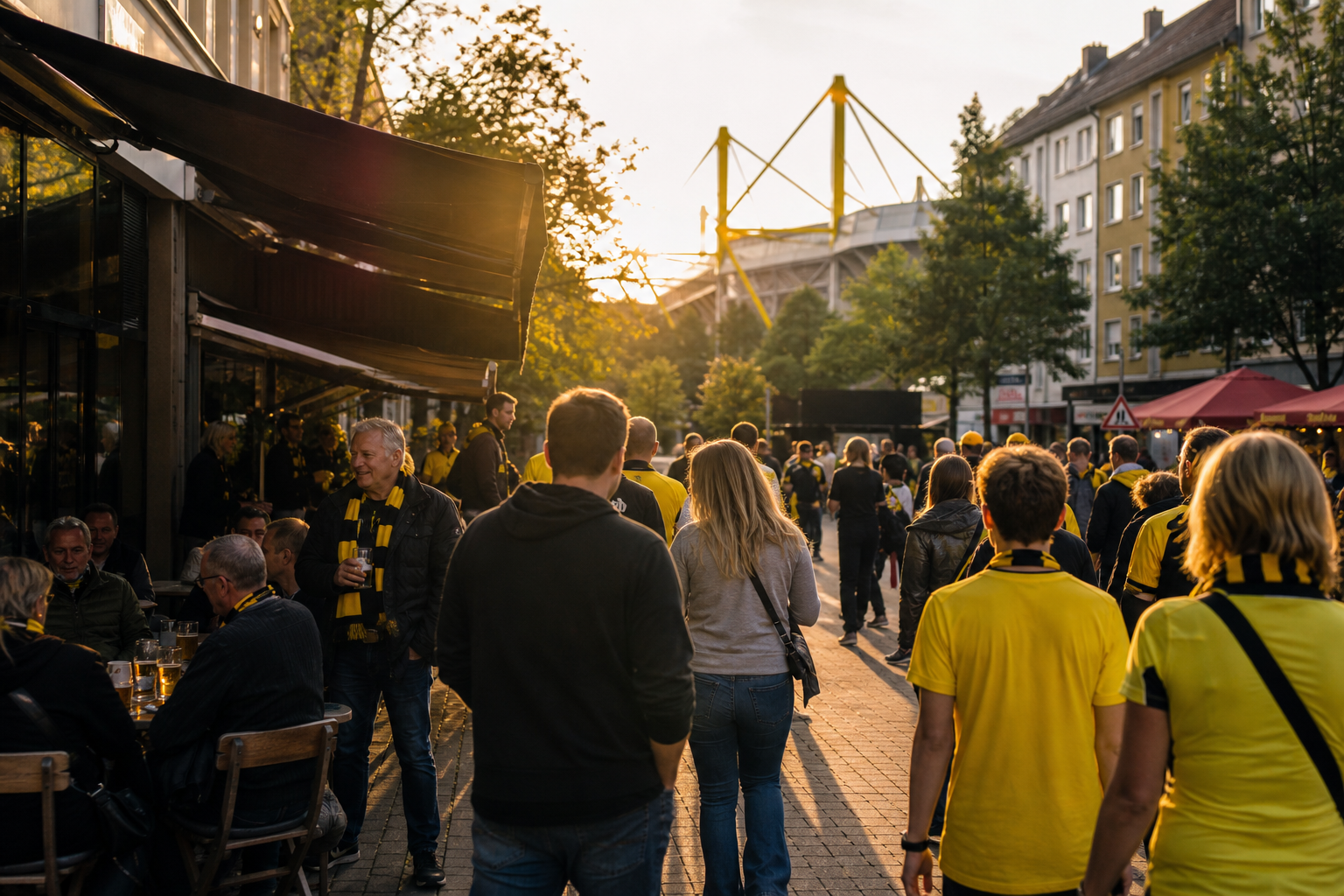
Dortmund eats and drinks with a Ruhr rhythm: hearty plates, beer, and packed fan pubs. Pre-match, many fans eat in the centre, then move toward the stadium streets as kick-off nears. Bars fill with yellow-and-black shirts; expect crowds and slower service on big nights. Away colours should follow club guidance for meeting spots rather than walking into the densest home rooms.
Hydrate on warm evening kick-offs. Keep valuables minimal in dense bars. After full time, many visitors wait for the first crush to thin before riding back for a calmer dinner.
Match-Day Timeline
Sightsee or rest early, then confirm digital tickets and that your category matches the stand you intended—especially if you specifically avoided Yellow Wall blocks. Eat about three hours before kick-off and travel with margin. Enter the stadium precinct 90–60 minutes before; screening takes longer than a neighbourhood ground. After full time, wait ten minutes if U-Bahn approaches surge, then peel back to the centre.
Building a Wider Bundesliga Itinerary
Dortmund pairs naturally with Cologne or Leverkusen over a Rhine–Ruhr long weekend, or with a Schalke fixture when both clubs are in the Bundesliga and calendars align. Start with the Bundesliga travel guide for fixtures, then shape logistics via football trips to Germany. For assisted booking, Sports Travel Online and Gothia Sports Travel help when you want fewer moving parts—and clearer category advice than a random reseller.
Food Detail & Match-Day Rhythm
Dortmund’s centre rewards an unhurried lunch before you commit to the stadium corridor. Many travelling fans eat near the old town or Hauptbahnhof, then move south-west with time to spare. Fan marches can thicken streets on big fixtures—give yourself space, keep phones charged, and agree a meeting point away from closed gates.
Inside the ground, cashless catering is the norm and half-time queues bite—eat before you enter if you hate missing the restart. After full time, wait ten minutes if U-Bahn approaches surge. Away supporters must stay in allocated sections; do not relocate into home standing areas for a “better Yellow Wall view.”
Families, First-Timers & Soft CTA
Signal Iduna Park attracts many first-time football travellers drawn by Yellow Wall videos. Families should confirm seated sections together and any age-related rules on official channels—standing terraces are not automatic family seating. Budget visitors face higher hotel spikes on Klassiker weekends; save by targeting quieter league opponents and booking centre hotels early.
Lock your fixture early, buy through official or highly reputable channels, and double-check that your seats are not in the wrong Yellow Wall blocks if you are a tourist seeking a seated experience. Pair tickets with a flexible central hotel, leave extra travel time, and keep the rest of Dortmund free for food and wandering. Done calmly—and seated in the right category—a Borussia Dortmund Bundesliga weekend is still one of football travel’s great German nights.