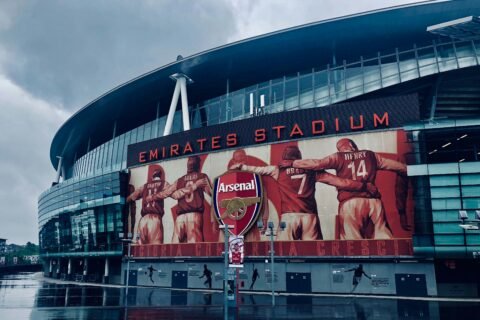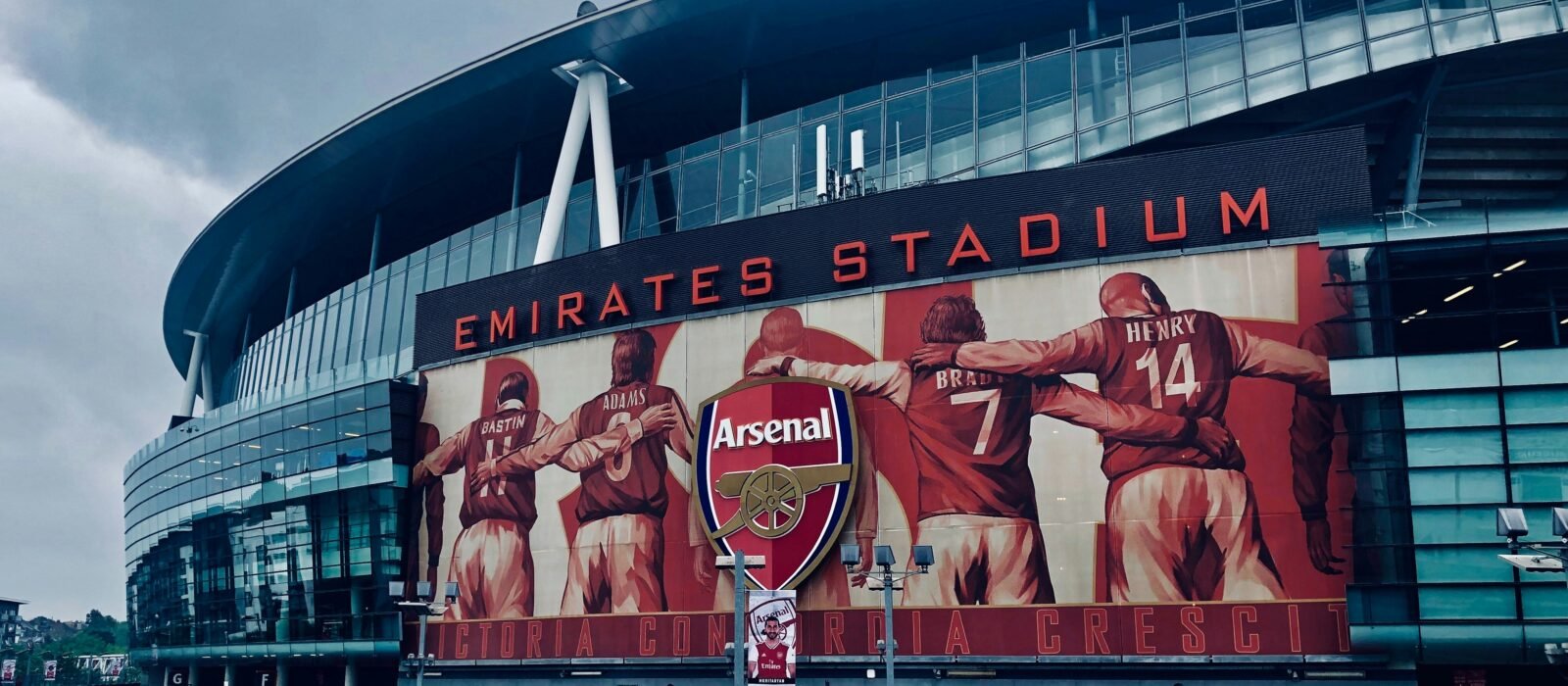
The story of Arsenal Football Club’s home is one of bold ambition, financial risk, and transformation. Opened in July 2006, the Emirates Stadium in Holloway, North London, marked Arsenal’s transition from a historic 20th-century football ground to an elite modern sporting institution.
1. The Need for Change: Leaving Highbury
For 93 years (1913–2006), Arsenal played at Highbury (the Arsenal Stadium). Renowned for its iconic Art Deco stands designed by Archibald Leitch and Claude Waterlow Ferrier, Highbury was a temple of English football.
However, by the late 1990s, Highbury suffered from a fundamental limitation: capacity.
- The Problem: Following the Taylor Report, Highbury became an all-seater stadium with a capacity of just 38,419.
- The Financial Gap: Major rivals like Manchester United were playing in front of 67,000+ fans at Old Trafford, generating significantly higher matchday revenue.
- The Constraint: Expansion was virtually impossible due to listed residential buildings directly surrounding the stadium and strict local planning restrictions.
Recognizing that matchday revenue would dictate future financial competitiveness, the Arsenal board, led by Chairman Peter Hill-Wood and Managing Director David Dein, took the momentous decision to build a brand-new stadium.
2. The Project: Ashburton Grove
In late 1999, Arsenal identified an industrial site at Ashburton Grove, located just a few hundred yards from Highbury.
Site Selection & Planning Approval
1999 – 2002
Arsenal identified Ashburton Grove and secured planning permission from Islington Council after extensive local consultations and land acquisition.
Naming Rights & Financing Secured
October 2004
Arsenal signed a landmark £100m sponsorship deal with Emirates Airline, securing stadium naming rights and shirt sponsorship.
Official Opening
July 22, 2006
The stadium officially opened with Dennis Bergkamp’s testimonial match against Ajax, attended by 54,000 spectators.
The relocation project cost approximately £390 million and required immense engineering feats, including building two bridges over rail lines to connect the stadium site with the surrounding neighborhood.
3. Financial Legacy & “The Transition Era”
The financial burden of funding a state-of-the-art £390m stadium without oil-backed or billionaire-injected equity heavily influenced Arsenal’s strategy throughout the late 2000s and early 2010s.
- Debt Repayment: Long-term fixed-rate bonds were used to fund the construction, requiring strict wage bills and positive cash flows.
- Player Sales: Long-time manager Arsène Wenger had to balance top-four Premier League finishes with limited net spend, often selling key stars to finance club operations.
- Long-term Dividend: The gamble ultimately paid off. The 60,000+ seat stadium provided massive matchday revenues that eventually positioned Arsenal as one of the financially robust clubs in world football.
4. “Arsenalisation” and Modern Identity
In its initial years, some supporters felt the modern glass-and-steel arena lacked the character and intimacy of Highbury. To address this, the club launched a comprehensive “Arsenalisation” project starting in 2009:
- The Highbury Clock: A replica of the iconic clock from Highbury was installed at the top of the South Stand (renamed the Clock End).
- Statues of Legends: Bronze statues of key figures—Herbert Chapman, Thierry Henry, Tony Adams, Dennis Bergkamp, and Arsène Wenger—were erected around the concourse.
- External Murals: In 2023, the club unveiled redesigned exterior artworks featuring 32 club legends alongside modern imagery, reinforcing the stadium’s identity as the permanent home of the Gunners.