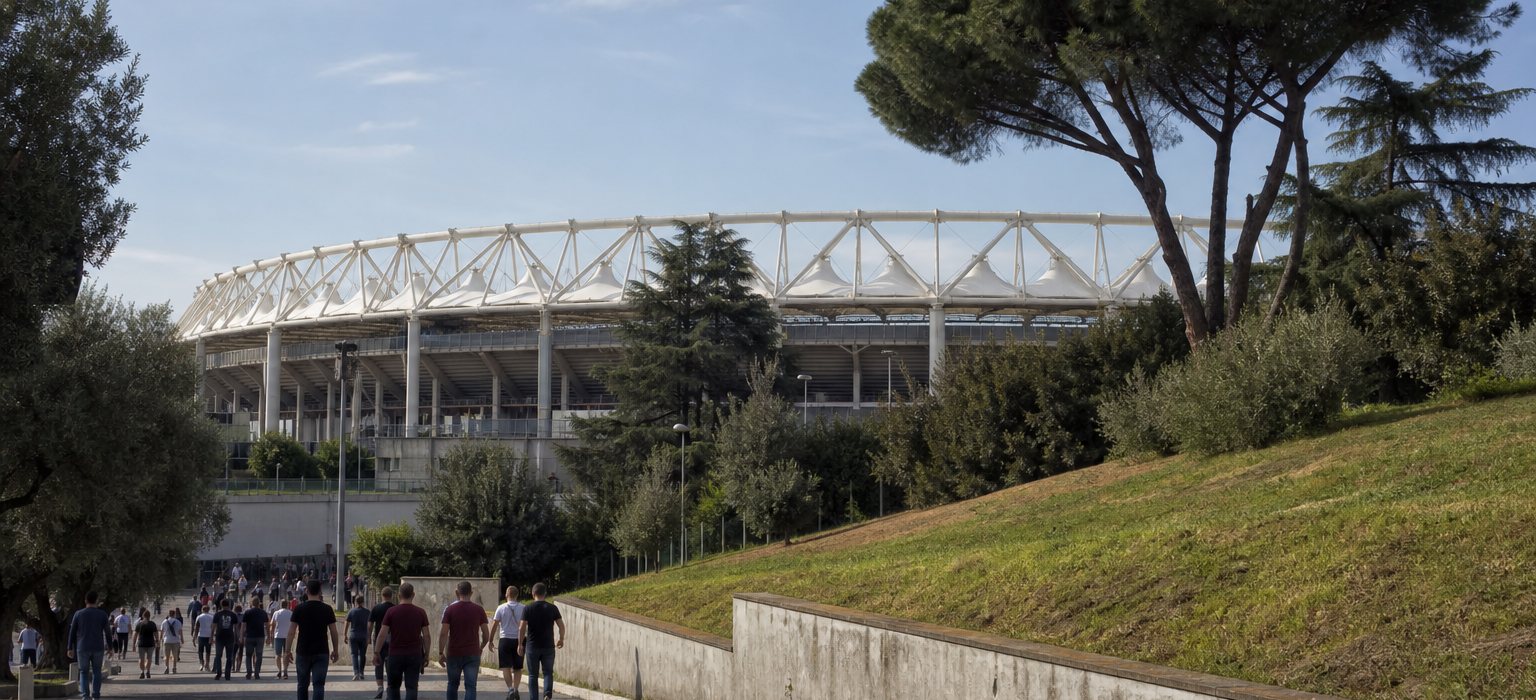
An AS Roma weekend ranks among Italy’s most atmospheric football trips: giallorossi colours across the Eternal City, a classic bowl at Stadio Olimpico, and a club culture that still feels intensely local. Home football in Rome is shared geography with Lazio—same stadium, entirely separate ticket shops and membership systems—so visitors must buy Roma products only. This guide covers practical tickets, transport, hotels, food, and match-day timing for the 2026/27 Serie A season, without fixed prices or invented kick-off times.
If you are comparing clubs across the peninsula, start with our overview of football trips to Italy and the wider Serie A travel guide for calendars and trip windows.
Why Roma Works for Travelling Fans
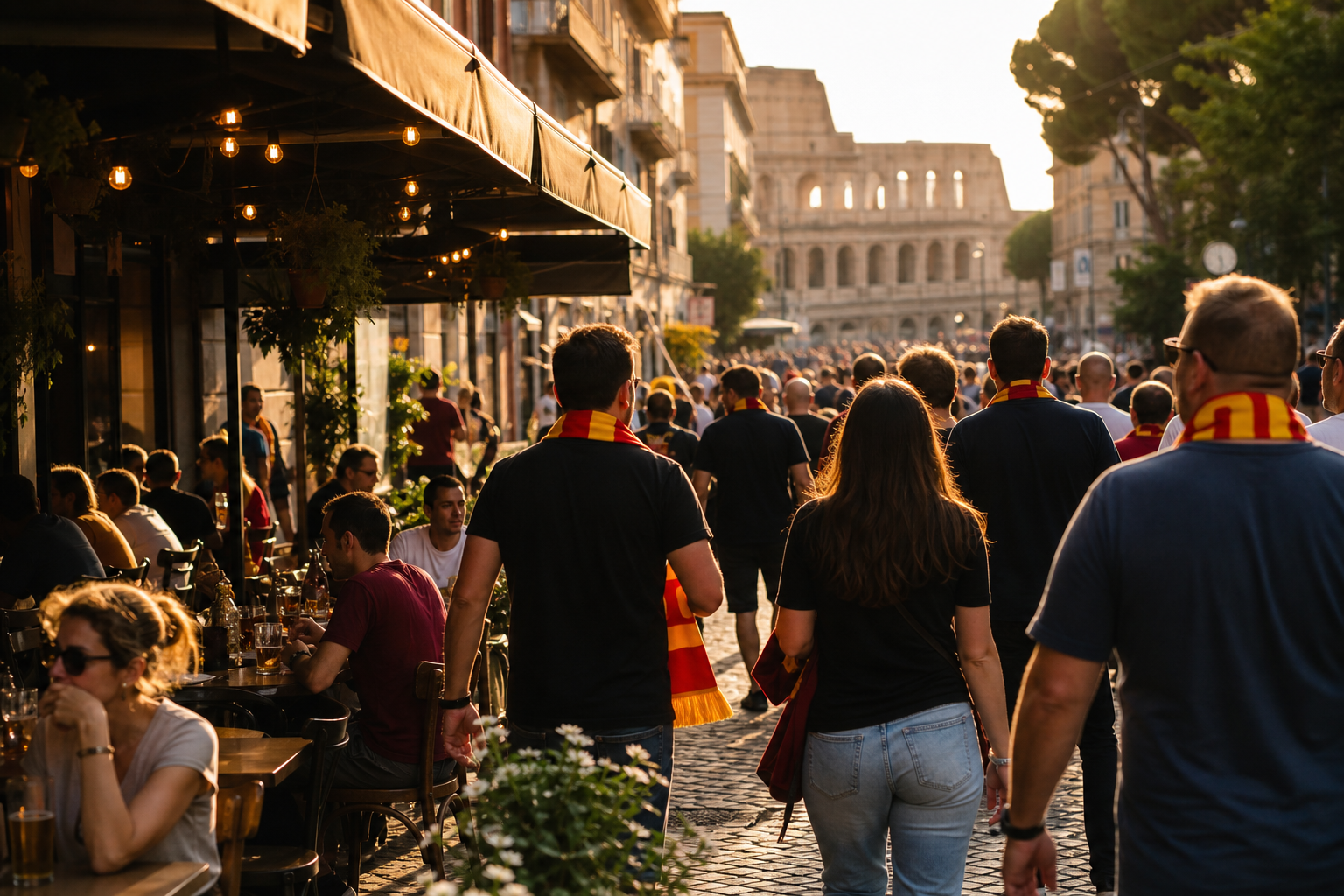
Roma match days blend city-break sightseeing with a loud evening in the Foro Italico area. Demand spikes for derbies, European nights, and fixtures against title contenders; quieter weekends can still sell because Rome itself pulls visitors year-round. Pair football with the Colosseum, Trastevere evenings, and slow café culture, and you have a full break—not just ninety minutes.
For multi-stop football trips to Italy plans, Rome often sits alongside Naples, Florence, or a northern train hop. Packages from Sports Travel Online and Gothia Sports Travel help when you want hotels and tickets coordinated.
Stadio Olimpico: Shared Ground, Separate Clubs
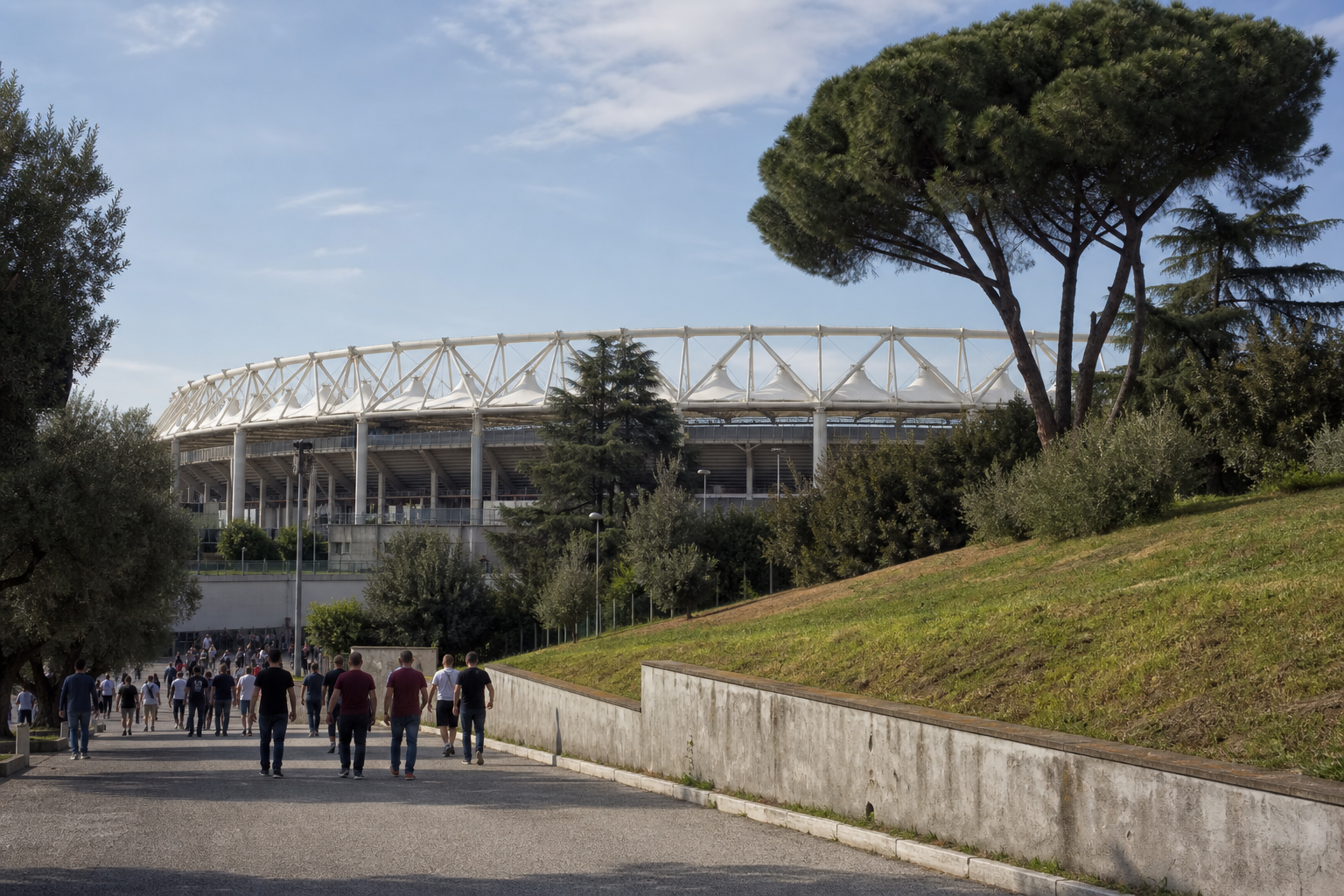
Stadio Olimpico sits north of the historic centre in the Foro Italico complex. Roma and Lazio both call it home, but ticketing, membership, hospitality, and customer service are club-specific. Never assume a Lazio seat works for Roma—or that a generic “Olimpico ticket” from a vague reseller is valid. Always buy through official Roma channels or a trusted specialist who names the club on the voucher.
Practical notes for first-timers
- Confirm gate and sector on your Roma ticket PDF the morning of the match.
- Approach roads and tram/metro combinations get busy; build a buffer.
- Follow stewards and live signage rather than outdated blog maps.
- Avoid the curva for a first visit. The curva sud (Roma) and curva nord (Lazio) are the hard-core ends: intense, standing-heavy culture, and not the right place for casual tourists, families, or anyone seeking a relaxed seat. Choose numbered seating in the main stands or hospitality products designed for visitors.
Your seat category and entry rules matter more than any capacity claim online.
Tickets: Tessera, Nominative Seats & Visitor Routes
Italian clubs often use tessera del tifoso / membership schemes that unlock priority windows. Popular Roma fixtures can be heavily subscribed by members before casual buyers see stock. Most one-off travellers work through general sale, official secondary mechanisms when offered, or reputable agencies.
Serie A tickets are typically nominative: the name on the ticket should match the ID you carry. Bring passport or national ID matching the booking. Transfers may be restricted—do not buy unnamed social-media seats. Hospitality packages sometimes bundle clearer seat guarantees; still verify name fields before travel.
General sale inventory appears in waves and varies by opponent. Derby della Capitale and top-club visits are among the hardest tickets in Rome. There is no responsible way to publish a single fixed price across a season. Safer habits: start with official AS Roma ticketing; use established specialists for packages; be sceptical of “guaranteed curva” offers aimed at tourists; align non-refundable flights only after you hold tickets—or keep fares flexible.
Soft package routes include the Roma Serie A page on Sports Travel Online and Gothia Sports Travel. Cross-check every date against club and league calendars, and browse the wider Serie A hub on Sports Travel Online if you are comparing Rome with other clubs.
Getting to Rome & Stadio Olimpico
Airports: Rome Fiumicino (FCO) is the main long-haul gateway; Ciampino (CIA) serves many low-cost flights. Both connect by train, bus, or taxi toward the centre.
Stadium access: From central Rome, plan metro/tram/bus combinations toward the Flaminio / Foro Italico area, then follow match-day crowds for the final walk. Taxis surge after full time—agree a meeting point early. Driving is rarely worth it for visitors on big nights.
Rail: Roma Termini and Tiburtina link high-speed services to Florence, Milan, Naples, and beyond—useful if you are stacking a Serie A travel guide multi-city itinerary.
Hotels: Where to Base Yourself
Most visitors stay central—Centro Storico, Trastevere, Prati, or near Termini—and travel out on match day. Prati and areas toward the north can shorten the final hop without isolating you from evening life. Priorities: reliable metro or tram access; flexible cancellation if kick-off moves; clear late check-out after Sunday games. Rome hotel rates spike around major fixtures and peak tourism—book early for derby weekends.
Food, Cafés & Pre-Match Spots
Rome eats late. Many fans do a proper lunch in the centre—carbonara, cacio e pepe, or pizza—then move toward the stadium with time to spare. Bars near the approach fill with giallorossi shirts; expect slower service on big nights. Ideas that work: morning espresso while sights are calmer; a midday sit-down meal away from the densest tourist traps; one pre-match drink maximum if you dislike queues with a buzz; post-match dinner in Trastevere or Prati once the crush thins. Keep valuables minimal and hydrate in warm evening kick-offs.
Match-Day Timeline
Morning: Sightseeing early; confirm digital tickets and ID names. Afternoon: Charge your phone, screenshot tickets offline, check official transport notes. 3 hours before: Eat, then start the journey with margin. 90–60 minutes before: Enter the stadium area and find your gate. First-timers: head to seated stands, not the curva. Kick-off: Soak up the noise and colours. Full time: Exits and public transport surge—wait ten minutes if you hate crush conditions, then leave for a late meal back in the centre.
Building a Wider Serie A Itinerary
Rome pairs naturally with Naples for a southern double over separate weekends, or with Florence and Bologna depending on the calendar. Inter are defending Serie A champions in 2026/27, so northern legs can feel busy; Rome still rewards visitors who plan seats early for marquee games. Start with the Serie A travel guide, then shape logistics via football trips to Italy. For assisted booking, Sports Travel Online and Gothia Sports Travel are useful soft CTAs when you want fewer moving parts.
Families, First-Timers & Budget Notes
Roma match days attract many first-time Italy football travellers, which means denser queues—yet still more bureaucracy around nominative tickets than many fans expect. Families should confirm seating together on official channels and skip the curva entirely. Budget visitors face higher hotel costs than provincial mid-table clubs; save by travelling midweek when calendars allow, staying in well-connected neighbourhoods slightly off the most photographed piazzas, and eating where locals queue.
Re-read Roma’s match-day FAQ in the week of the game. If your seat category looks unfamiliar, trust the live ticket PDF and steward directions. Pack metro-friendly footwear, a light evening layer, phone battery pack, passport or ID matching the nominative ticket, and a stadium-compliant bag.
Soft CTA
Lock your fixture early for derby and marquee games, buy only through official Roma or highly reputable channels—never confuse Lazio’s shop with Roma’s—and choose seated visitor-friendly sectors rather than the curva on a first trip. Pair tickets with a flexible central hotel, leave extra travel time to the Olimpico, and keep the rest of Rome free for food and wandering. Done calmly, an AS Roma Serie A weekend remains one of football travel’s great city breaks.