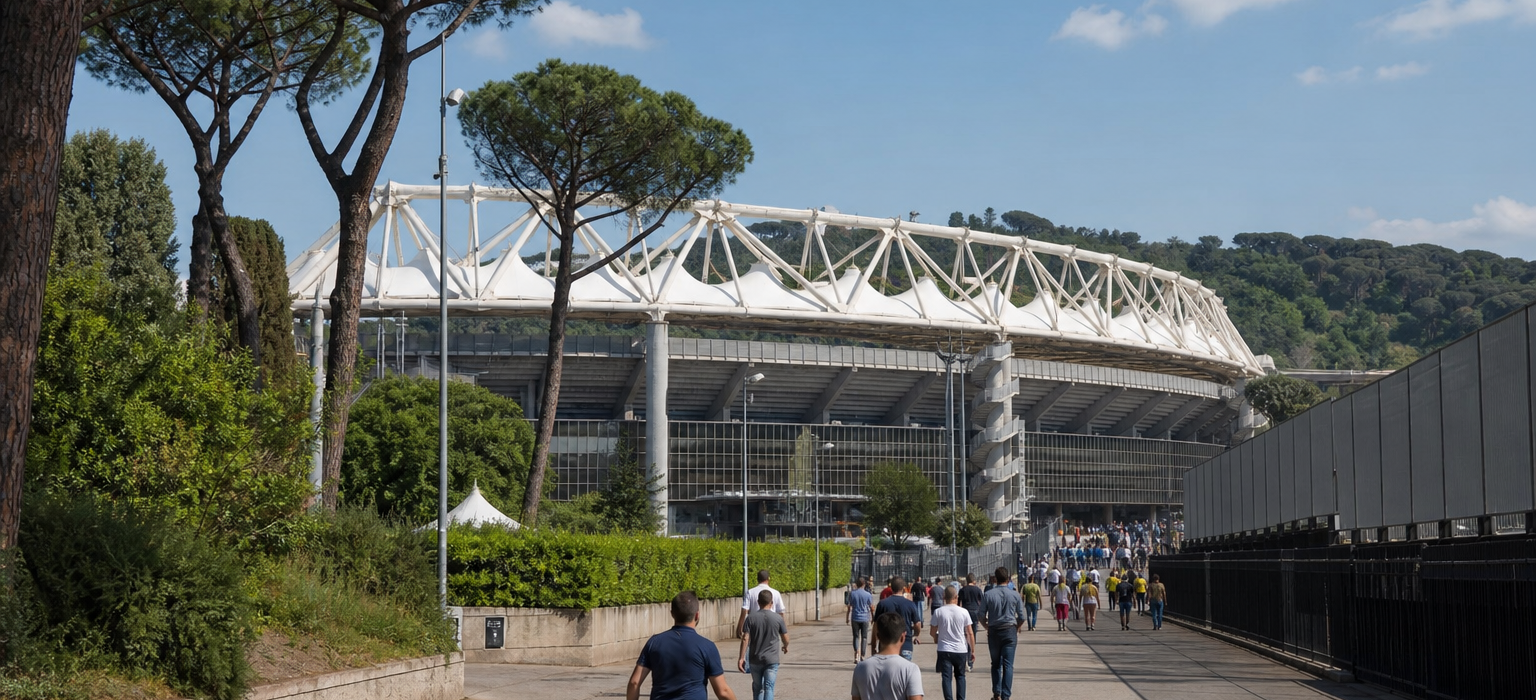
A Lazio football trip puts you in Rome for Serie A at Stadio Olimpico—the shared Olympic Stadium that also hosts Roma, but with a completely separate ticket shop, membership culture, and match-day identity. Sky-blue shirts and a passionate home support define the occasion. For 2026/27 travellers planning football trips to Italy, Lazio offers capital-city sightseeing wrapped around a genuine top-flight night, provided you buy through the right channels and sit in visitor-friendly sections.
Start with our Serie A travel guide for calendars and travel windows.
Why Lazio Works for Rome Football Travel
Rome already draws travellers for ruins, food, and neighbourhood walks; adding a Lazio home game turns a city break into a football weekend. Olimpico sits in the Foro Italico sports complex north of the centre, so match day feels like a purposeful outing rather than a stroll from the Colosseum. Demand spikes for derby fixtures, European nights, and visits from Milan or Turin clubs—mid-table weekend games can be more realistic for first-time visitors.
Public transport reaches the stadium, central hotels remain the sensible base, and you can still fit morning museums around an evening kick-off. Packages from Sports Travel Online and Gothia Sports Travel help when you want seats and hotels coordinated.
Stadio Olimpico: Shared Ground, Separate Club Experience
Lazio and Roma both call Olimpico home, but they run separate ticket shops, membership schemes, and customer-service channels. Never assume a Roma ticket page will sell you Lazio seats—or vice versa. Confirm the home club, fixture, and entrance on your confirmation before you fly.
Follow live Lazio guidance for gates, bag rules, and accessibility. Do not rely on outdated capacity figures. Museum or tour products (when offered) are separate from match tickets. Approach roads and metro stations fill on derby nights—build buffer time.
Curva warning for tourists
The Curva Nord (and the corresponding curva culture at Olimpico generally) is the heart of organised ultra support. It is not a sightseeing stand. Travelling fans and first-timers should avoid curva tickets unless they truly understand the culture, standing traditions, and club allocation rules. Choose numbered seats in lateral or tribuna categories aimed at general spectators. Stewards take section rules seriously; follow them.
Tickets: Membership, Tessera, General Sale & Hospitality
Lazio members and season-ticket holders get priority on popular fixtures. Casual visitors usually wait for general-sale waves or work with reputable agencies.
Italian ticketing can involve tessera del tifoso requirements for certain categories. Rules change by season—verify on official Lazio channels for your game. Serie A tickets are typically nominative: the name should match the ID you carry. Use official transfer tools if names need changing.
General sale varies wildly by opponent. Derby della Capitale nights are among Italy’s hardest tickets; quieter midweek games open more categories. Hospitality suits travellers who want a hosted experience. There is no responsible fixed price across a season.
Safer habits: official Lazio ticketing first; Sports Travel Online when you need a package; scepticism toward social-media “guarantees.” Soft support also via the Serie A hub on Sports Travel Online and Gothia Sports Travel. Align non-refundable flights only after seats are confirmed—or keep fares flexible.
Getting to Rome & Stadio Olimpico
Airports: Rome Fiumicino (FCO) is the main long-haul gateway; Ciampino (CIA) serves many low-cost routes. Trains, buses, and taxis connect into the centre.
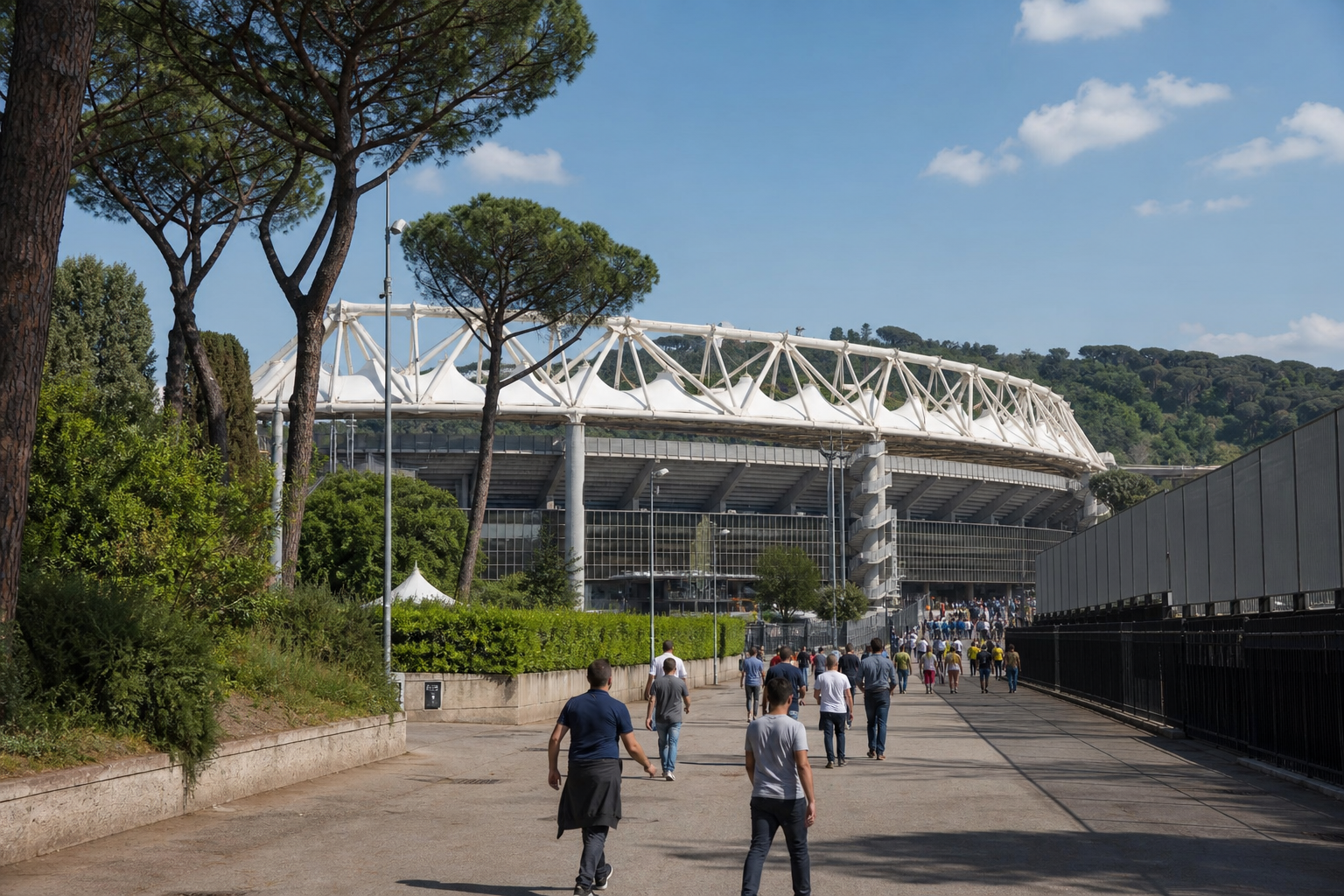
Stadium access: Olimpico is best reached by metro plus a walk or local bus/tram combinations toward Foro Italico—follow match-day crowds and steward signage for the final approach. Build extra time for security queues on big fixtures.
Rail: High-speed trains link Rome with Florence, Naples, Milan, and Bologna, useful if you are stacking football trips to Italy across multiple cities.
Hotels: Where to Base Yourself
Most visitors stay central—near Termini for transport, Trastevere for evenings, Prati for a quieter northern base, or around the historic core—and travel out on match day. That maximises food and sightseeing. Staying nearer the stadium shortens the final hop but can feel quieter after full time.
Priorities for football travellers include reliable metro or tram access, flexible cancellation if kick-off moves for television, clear late check-out options after Sunday games, and safe luggage storage if you have a late flight. Rome hotel rates spike around major fixtures, marathons, and peak tourism weeks. Book early for derby weekends. Use the Serie A travel guide if you are sequencing Rome with Naples or Florence later in the season.
Food, Cafés & Pre-Match Spots
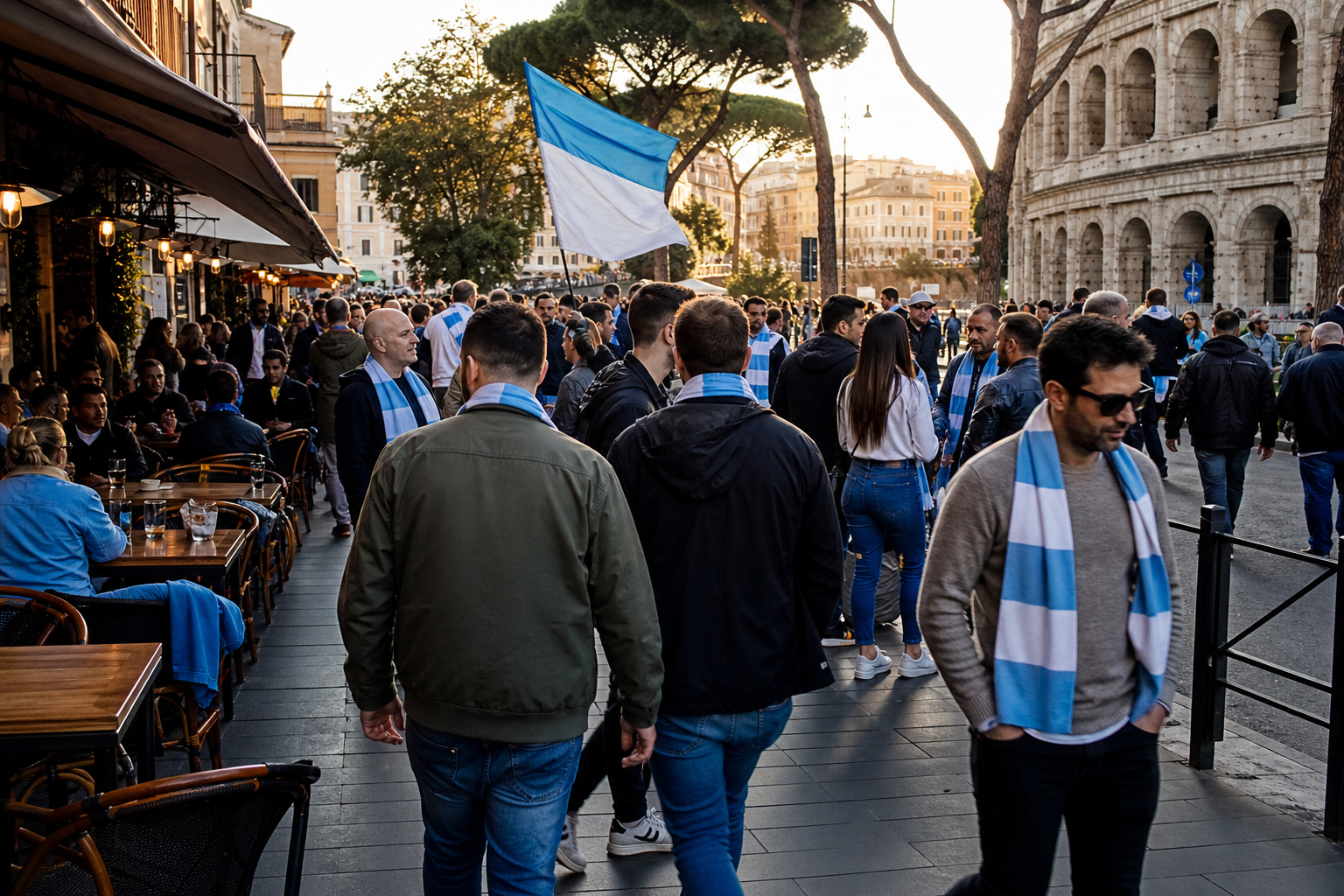
Rome eats well at almost every price point. Many fans lunch in the centre—carbonara debates included—then move north toward the stadium with time to spare. Bars near Olimpico fill with sky-blue shirts; expect slower service on big nights. Keep valuables minimal in dense bars and hydrate on warm evening kick-offs. One pre-match drink maximum if you dislike queues with a buzz; save a longer dinner for after the metro surge thins in Trastevere or Prati.
Match-Day Timeline
Morning: Sightseeing while streets are calmer. Afternoon: Confirm digital tickets, check transport notes, charge your phone, and verify nominative names against IDs. 3 hours before: Eat, then start with margin. 90–60 minutes before: Enter the stadium area; follow live signage. If your ticket is not in the curva, do not try to “upgrade” into it. Full time: Wait ten minutes if you hate crush conditions, then leave for a late meal.
Building a Wider Serie A Itinerary
Rome pairs naturally with Naples for a southbound double, or with Florence and Bologna on a central-Italy rail loop. Start with the Serie A hub for fixtures, then shape logistics via football trips to Italy. For assisted booking, Sports Travel Online and Gothia Sports Travel remain useful soft CTAs when you want fewer moving parts—browse the wider Serie A catalogue if you are comparing clubs.
Families, First-Timers & Budget Notes
Olimpico attracts many first-time travellers in Rome—denser queues and higher hotel costs than provincial grounds. Families should confirm seating together and steer clear of curva allocations. Save by travelling midweek, staying slightly off the Trevi strip, and eating where locals snack.
Because Lazio and Roma share the stadium but not the ticket shop, re-read the Lazio-specific match-day FAQ in the week of the game. Pack metro-friendly footwear, a phone battery pack, a stadium-compliant bag, and photo ID matching the ticket.
What to pack for a Lazio match day
- Metro-friendly footwear and a light rain layer for evening returns
- Phone battery pack for tickets, maps, and post-match meet-ups
- Stadium-compliant bag; leave bulky souvenirs for after the match
- Photo ID matching the nominative ticket
- Flexible mindset if approach routes differ from older blog maps
Rome rewards travellers who treat football as one chapter of a longer weekend: morning museums, a proper lunch, then the northern hop to Foro Italico. Keep your ticket shop discipline clear—Lazio only—and your stand choice visitor-friendly.
Soft CTA
Lock your fixture early for derby and marquee games, buy through official Lazio channels or highly reputable specialists, and keep hotels flexible until seats are confirmed. Choose spectator stands rather than the curva, leave extra travel time to Foro Italico, and keep the rest of Rome free for food and wandering. Done calmly, a Lazio Serie A weekend is one of football travel’s great capital-city breaks.